
 ›
Quality of living
›
Storms, floods, heatwaves, fires… Building façades are innovating to rise to the challenge
›
Quality of living
›
Storms, floods, heatwaves, fires… Building façades are innovating to rise to the challenge 
 8 min
8 min
Share

Écouter cet article
La version audio est fournie par Trinity Audio. Son activation dépose des cookies permettant de vous identifier de manière persistante. En savoir plus
As climate change increases in intensity, the façade is becoming a key element in building resilience. Long considered a simple interface between indoors and outdoors, it is now becoming an active system, capable of protecting, regulating, and sometimes even generating power. Against a backdrop of increasingly frequent heatwaves, extreme rainfall, violent winds, and forest fires, the building envelope is the first line of architectural and technical defense.
While Europe, the United States, and India are advancing at different rates in adopting solar protection solutions, high-performance glazing, and sustainable infrastructure, the same question now arises across all regions: how can we transform building façades to enhance the adaptability of buildings over the long term? This question marks a paradigm shift, inviting us to consider the façade no longer as a static component, but as a dynamic system.
Reconciling extreme heat with comfort
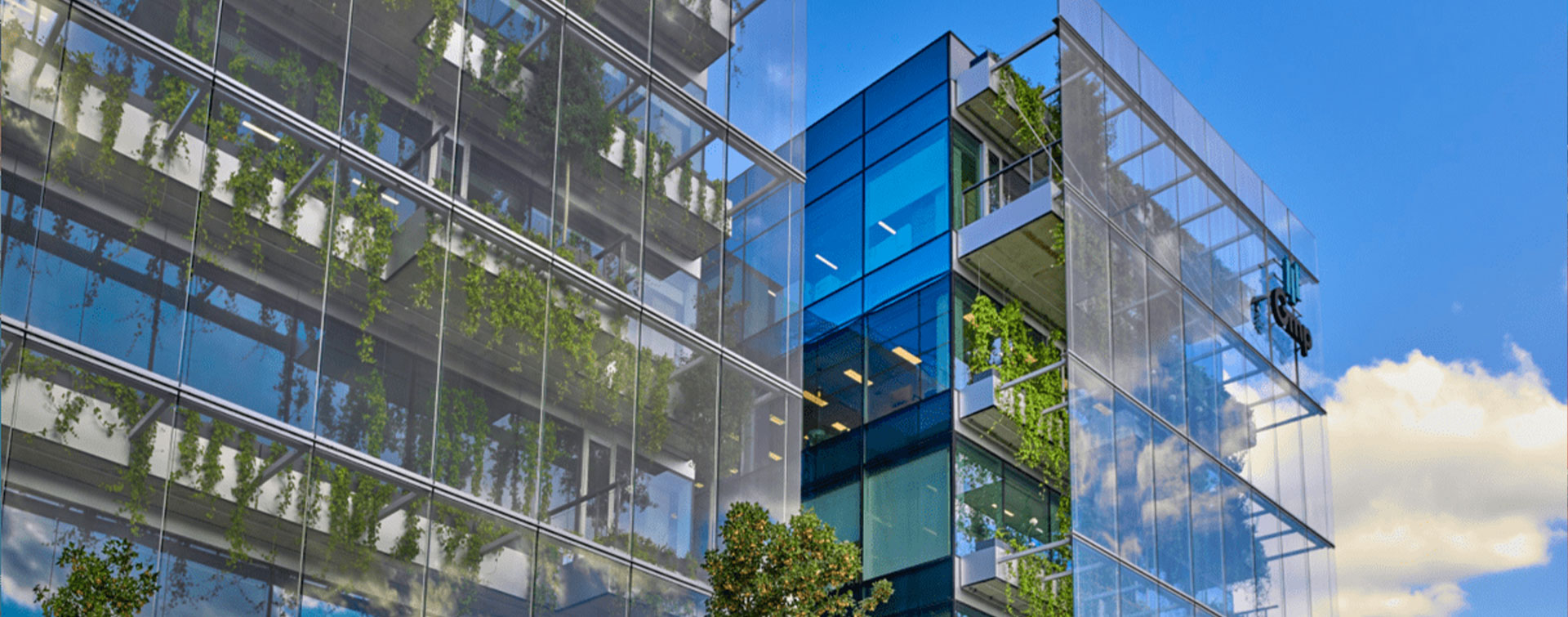
Extreme heat is undoubtedly the hazard where the role of the façade is most visible. Solar protection (sunshades, overhangs, adjustable slats, or fabric systems) can limit direct radiation while preserving natural light. Light-colored, reflective coatings reduce surface temperatures and help combat urban heat islands. Greened façades and roofs add a layer of regulation through shade, evapotranspiration, and thermal inertia. Added to this are high-performance envelopes, based on continuous insulation and enhanced airtightness, which stabilize indoor temperatures.
Pelgulinna State Secondary School in Tallinn, Estonia, uses large glass façades to create a bright environment conducive to learning. Its key feature is the use of high-performance solar control glass, which allows up to 60% of natural light to enter while significantly limiting heat gain. This choice guarantees visual and thermal comfort throughout the year, reduces the need for air conditioning, and minimizes heat loss in winter.
Controlling water flows
Episodes of heavy rainfall also place the façade at the heart of adaptation strategies. Beyond resistance to water, the challenge is to slow down, store, and manage water flows in order to limit damage. So-called blue-green solutions, combining vegetation and water management, play a key role here. Roofs capable of temporarily retaining water, façades that protect against driving rain, continuous membranes and seals, moisture-resistant insulation: the building envelope is becoming a risk-prevention tool in its own right.
Also Read:
“Water stress: a systemic approach is essential”
A notable example is the Colegio Público Gabriela Mistral school in Badajoz, Spain, which has undertaken a complete renovation focused on nature-based solutions to address high temperatures and lack of water. The project combines green roofs, planted façades, indoor vertical gardens, shaded pergolas, and permeable paving. These improvements have lowered classroom temperatures below the recommended comfort threshold of 27°C, with a difference of 5.4°C observed between areas with green roofs and those without. They have also reduced rainwater runoff from 13% to just 3%.
When extreme winds challenge norms
Extreme winds, storms, and hurricanes raise questions about the structural robustness of façades. In these situations, resistance depends not only on the materials, but on the system as a whole: panels, anchors, connections, fasteners, and added protection. The limitations of designs based on past climate data are now clearly identified, calling for façades capable of absorbing and distributing increased dynamic loads without failure.
Impact-resistant glazing, reinforced panels, and sunshades designed to retract automatically in the event of an alert illustrate this systemic approach. Fasteners, often the weak link in the envelope, are also of great importance. This systemic approach is at the heart of FORTIFIED™ homes, developed in the United States, which have reinforced roof-wall connections, exterior walls, and openings to improve the safety, durability, and structural integrity of buildings in the face of extreme wind.
The last protection against fire
With the increase in bush fires and the expansion of the areas at risk, the façade plays a crucial role in protecting buildings and their occupants. In addition to fire resistance, the façade must limit the spread of embers, reduce the risk of ignition, and prevent the infiltration of toxic fumes to maintain acceptable indoor air quality during extreme events. In these contexts, the building envelope is no longer just a simple facing: it acts as a thermal shield and a sanitary filter, capable of delaying or even preventing the spread of damage.
Also Read:
Towards greater adaptation and resilience: the essential role of the insurance sector
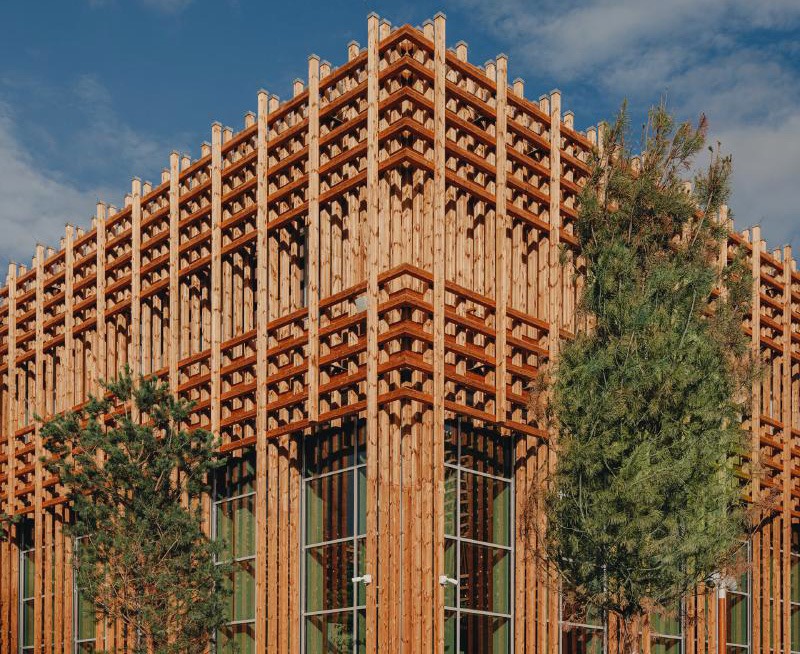
This development is based on a combination of complementary solutions: non-combustible materials with high inertia, fine mesh screens that block embers, heat-resistant safety glazing, and more airtight envelopes combined with high-performance filtration systems. In some areas affected by wildfires, particularly California, reconstruction efforts have highlighted the appeal of traditional materials such as mud-bricks. Dense, continuous, and non-combustible, mud-brick walls can withstand very high temperatures for several hours, limiting ignition and the spread of flames. Their recognition in contemporary building standards confirms that ancient techniques, reinterpreted, can provide an effective answer to current climate risks.
And tomorrow?
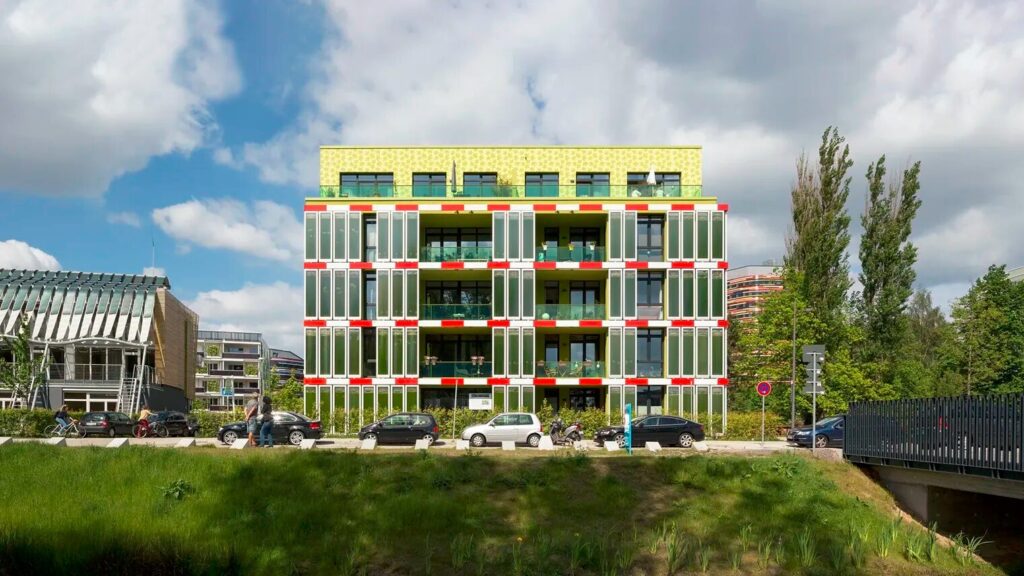
Behind the scenes, a new generation of façades is emerging, set to play a strategic role in the climate adaptation of buildings. Adaptive façades incorporating mobile sun protection, smart glazing capable of modulating light and heat, or energy-generating envelopes combining photovoltaic panels and innovative biological systems: these solutions reflect a profound change in construction practices, with the façade becoming an active system that protects, regulates, and directly contributes to the environmental performance and resilience of the building.
*Arup is a global built environment consultancy delivering projects in more than 130 countries. It guides, plans, and designs the future of the built environment, providing extensive technical and advisory expertise to clients.
Also Read: