
Do You Speak Circular?

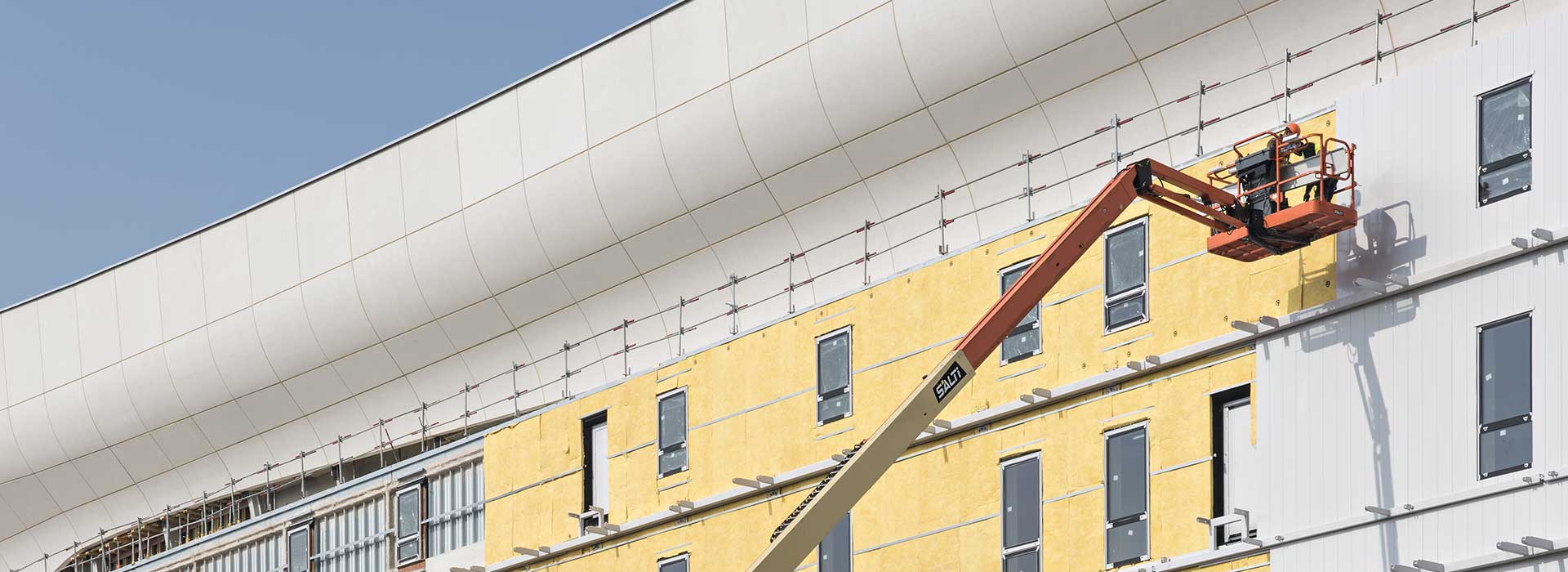
Rénovation d’un bâtiment en Suède, pour lequel les anciens vitrages ont été récupérés et envoyés dans une fonderie pour être transformés de nouveau. Une illustratipon du cercle vertueux de l'économie circulaire.
 ›
Circularity
›
Do You Speak Circular?
›
Circularity
›
Do You Speak Circular? 
 5 min
5 min
Share


Upcycling
Refers to a process of transforming waste or by-products into new products or objects of higher quality than that of the original material or product. Upcycling does not degrade the physical or chemical properties of the material but aims to enhance used products by giving them a new, higher-quality life. In other words, it gives a “high-end” new life to the original material (wood planks, old tarpaulins, fabric, cardboard, plastic packaging, etc.), often very far removed from its initial use. In doing so, it reduces demand for virgin resources and helps limit environmental impacts.
In the building sector, a project such as Upcycle House, carried out by Lendager Arkitekter in Denmark, made it possible to reduce embodied CO₂ emissions by 86% compared with an equivalent conventional construction project.
Downcycling
In contrast to upcycling, refers to a process in which materials are transformed into products of lower value than the original material. This practice causes a loss of functional or mechanical properties, reducing the range of future reuse possibilities. As a result, the material’s life cycle is only rarely extended.
For example, crushing glass to turn it into road aggregate degrades the material, limiting its reuse to a range of only 10 to 20%.
Another example of downcycling: solid wood transformed into particleboard. Recovered wood is shredded into chips, mixed with resins, and pressed into particle panels. The original solid wood had higher value and more noble uses. The resulting panel contains glues and additives, making it impossible to return to solid wood. Functional value is significantly reduced.
Virgin raw materials
A virgin raw material is a resource extracted directly from the environment (soil, subsoil, forests, seas, etc.) that has never been used, processed, or recycled before. In other words, it is a new material resulting from extraction (a non-renewable resource) or harvesting (a renewable resource), as opposed to a recycled or reused raw material.
Typical examples include: iron ore to produce steel; sand to manufacture glass or cement; wood to produce structural elements or insulation; oil to manufacture plastics.
The use of virgin raw materials generally involves a higher environmental impact (extraction, transport, processing) and a higher carbon footprint compared with reuse or the use of secondary materials (recycled materials or by-products).
According to the Ellen MacArthur Foundation, adopting circular economy principles could reduce emissions by up to 50% in the construction sector by improving material efficiency, increasing recycling rates, and reducing waste.
Secondary raw materials
Unlike virgin raw materials, this term refers to materials obtained at the end of a recycling or recovery process involving waste or end-of-life products. They therefore replace virgin raw materials in the production cycle, with a lower environmental impact and reduced pressure on ecosystems. Provided they meet sufficient quality criteria, secondary raw materials help significantly reduce the carbon footprint of a product
Industrial by-products can also be considered secondary raw materials. An industrial by-product is a material resulting from a manufacturing process that is not the primary product. If it has a use value and can be reused in another industrial process, it then becomes a secondary raw material. Examples include: blast furnace slag (from the steel industry) used to produce cement or rock wool; fly ash from thermal power plants used in concrete.
In Europe, steel recycling is estimated to reduce energy consumption by nearly 72% compared with steel produced from ore.
Circular Material Use Rate (CMUR)
Refers to an indicator developed by the European Union that evaluates, for a given production cycle, the ratio of secondary materials in the total input of materials used. The higher the CMUR, the more sparing the cycle is in virgin raw materials and the more efficient the circulation of resources. In the construction sector, it makes it possible to measure the level of circularity of the materials used and their effective recovery.
The European Environment Agency indicates that the CMUR across the entire European Union stood at 11.8% in 2023, an increase of 1.1 percentage points compared with 2010.
Environmental Product Declaration (EPD)
Framed by the international standard ISO 14025, the Environmental Product Declaration (EPD) is a document that inventories the environmental impacts of a given product or material. It includes detailed and precise information on the negative externalities generated throughout the product’s life cycle, such as the production of non-recoverable waste, toxicity, CO₂ and ozone emissions, and water consumption. The EPD is valid for five years.
Depending on the formulations used to produce lower-carbon concrete, known as “low-carbon” concrete, it is possible to achieve reductions in the carbon footprint of concrete of up to 60%.