

 ›
Politics and economics
›
Quality of Life: When Demographic Realities Come Into Play
›
Politics and economics
›
Quality of Life: When Demographic Realities Come Into Play 
 7 min
7 min
Share

Écouter cet article
La version audio est fournie par Trinity Audio. Son activation dépose des cookies permettant de vous identifier de manière persistante. En savoir plus
More than half of the world’s population already lives in urban areas, and by 2050 this will be the case for nearly 7 people out of 10! A development that often tests the planning and construction capabilities of cities. At the same time, some large cities need to adapt their housing stock to aging populations, while others face increased land and social pressure due to the arrival of new residents.
For the construction sector, these demographic trends call for sustainable solutions that are both resilient and attentive to the comfort and well-being of the greatest number of people.
Combating informal housing
In regions with high population growth, one of the challenges is to prevent the uncontrolled expansion of informal housing. UN-Habitat and the World Bank identify Sub-Saharan Africa and several regions of Asia, notably Central and South Asia as well as East and Southeast Asia, as the most exposed areas, with rapidly expanding urban populations.
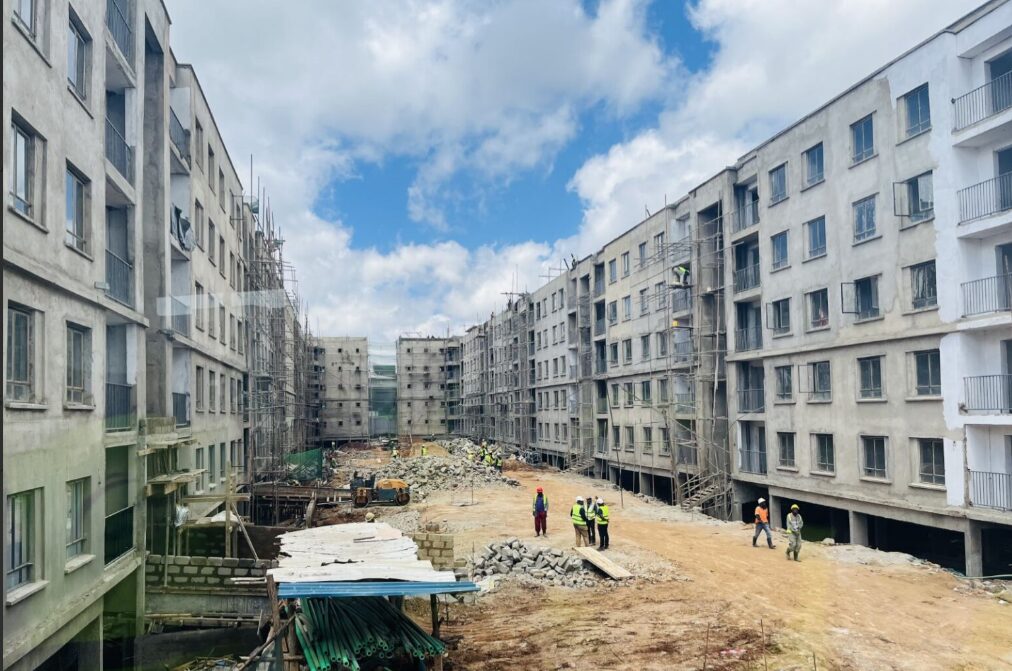
Kenya: providing housing for low-income families and reducing energy bills
In Nairobi, Kenya, access to safe and affordable housing remains a major challenge in this rapidly growing city. In response to this pressure, IFC supports the IHS Kenya Energy Efficient Housing program, which develops EDGE-certified apartments for low-income households, designed to reduce energy consumption. These buildings are designed to lower utility bills, improve thermal comfort, and reduce the environmental footprint. The Rent to Buy model aims to secure access to home ownership while avoiding systematic relocation to the suburbs, which often means long commutes and a lower quality of life. By combining energy efficiency, affordable prices, and proximity to economic hubs, the program offers a concrete and sustainable alternative to informal expansion.
Chile: housing that adapts
In other regions, which are not currently experiencing population explosions, informal housing inherited from past choices can still have a negative impact on quality of life and require innovative housing solutions.
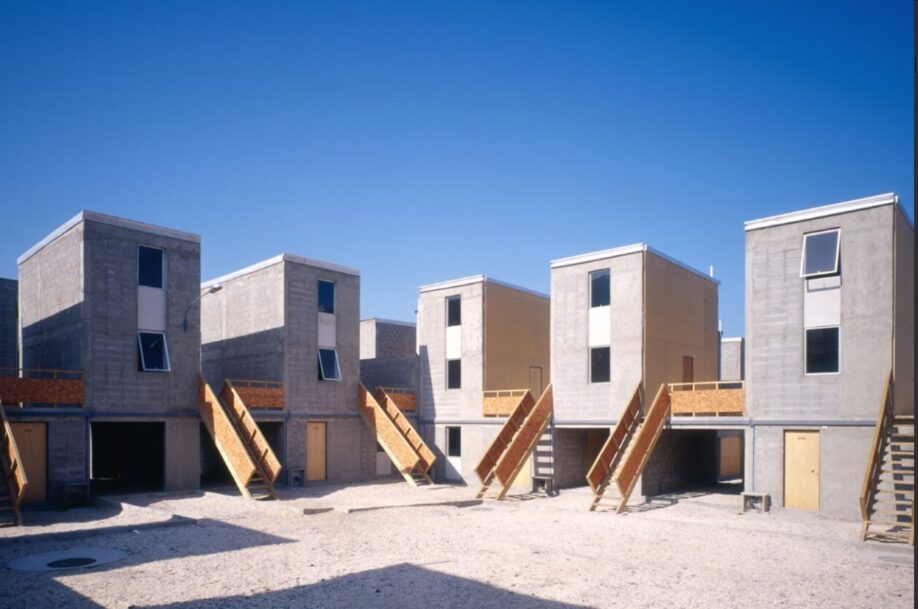
In Latin America, the Quinta Monroy project in the city of Iquique (Chile) is a global benchmark in adaptive social housing. Designed by the firm Elemental, it is based on an original principle: building a structurally sound “half-house” with foundations, load-bearing walls, roofing, and utilities, and giving families the opportunity to gradually expand their homes according to their needs and resources.
By targeting low-income households already living in the city, with changing family circumstances and facing significant pressure on housing, the project illustrates a different way of thinking about social housing: not as a fixed product, but as a framework capable of evolving over time. A qualitative demographic response based on residential stability, dignified housing, and long-term well-being.
Not enough floorspace, but plenty of ideas
In other regions, the lack of available land is an issue. Large cities in East Asia, Indonesia, and Europe are experiencing radically new forms of population density.
Tokyo: happy downsizing
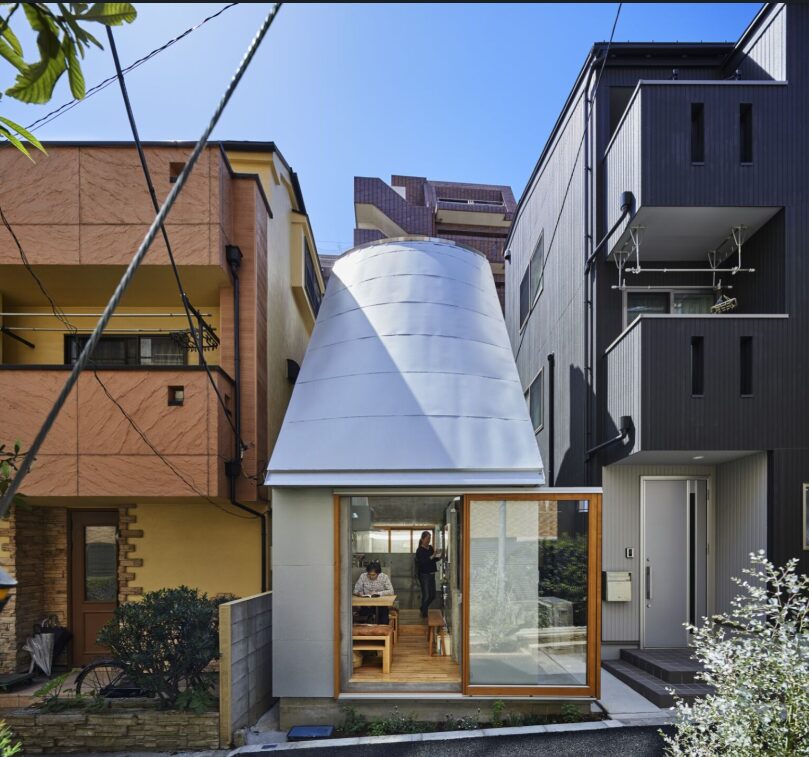
In Tokyo, Japan, where land pressure is among the most intense in the world, the Love2 House micro-home, designed by Takeshi Hosaka, illustrates an architectural response that is both demographic and qualitative. On an extremely small plot, the project maximizes light, ventilation, and comfort through us of a skylight and large openings. It shows that it is possible to increase density without sacrificing quality of life. A key issue in a city where available space is limited while the urban population continues to grow
New York: off-site construction to increase density
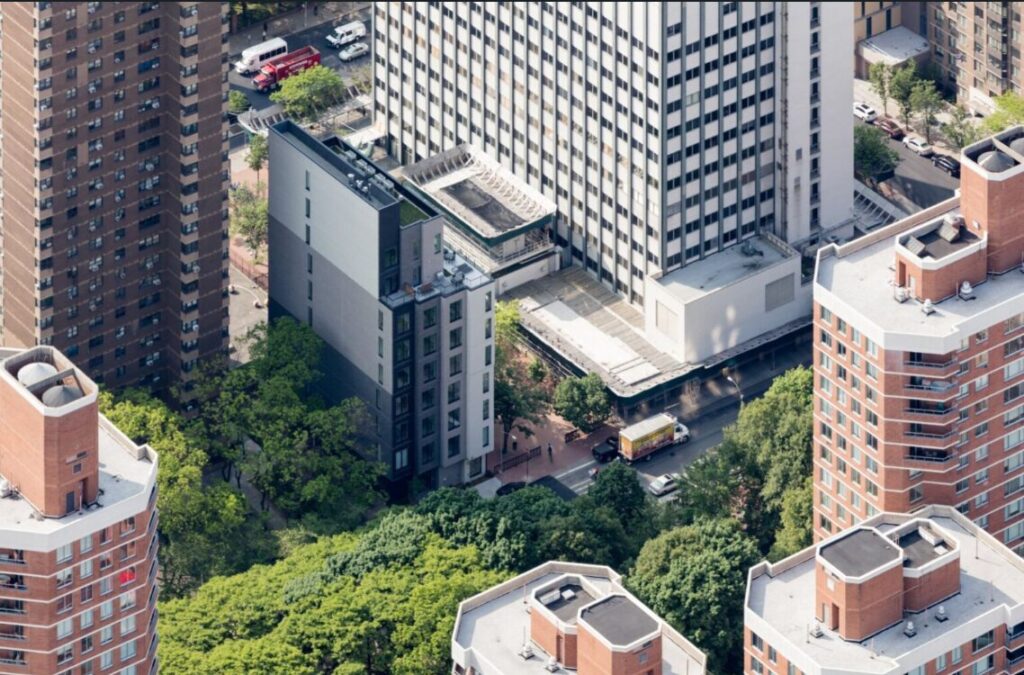
In Manhattan, where a shortage of land and the growth in one-person households are increasing demographic pressures, Carmel Place has become a textbook case study. The 55 prefabricated micro-units show how increased density can go hand in hand with real quality of use: large windows, generous ceiling heights, shared spaces. Designed in response to a call for proposals from the City of New York to meet the growing need for small housing units, Carmel Place illustrates a strategy: offering solutions adapted to new family configurations while limiting pressure on land use.
When the over-65s outnumber the under-fives
Aging is one of the most defining transitions of the century. In 2018, for the first time, people aged 65 and over outnumbered children under the age of five worldwide, according to the United Nations. And by 2050, this age group will outnumber the 15–24 age group globally.
According to the World Health Organization (WHO), cities need to incorporate three principles: accessibility, social inclusion, and proximity to services.
Hong Kong: housing and health
In Hong Kong, where the population is aging rapidly, the Hong Kong Housing Society has launched the Senior Citizen Residences Scheme, a housing program for people over 60. Residents benefit from lifetime leases and integrated services: care, assistance, adapted common areas, social activities. The model is designed to meet the health, accessibility, and social needs of an aging population, while ensuring a safe, stable, and comfortable environment. This program is recognized by the WHO in its work on age-friendly cities.
Amsterdam: modularity and reversibility
In the IJburg neighborhood, Amsterdam (Netherlands) is developing housing specifically designed for seniors, with a focus on modularity and circularity. The Van IJburg building features a timber structure that can be disassembled and adaptable modules, allowing spaces to be reconfigured according to the degree of autonomy of the residents. The project includes shared spaces and accommodation for caregivers, offering housing that can support life transitions without upheaval. For aging cities, it is a model of social infrastructure and sustainable comfort.
At a time when demographics are a real game-changer (rapid growth in the South, accelerated aging in the North, climate-driven migration), construction must become more sustainable, not only to meet environmental imperatives, but also because demographic realities dictate our collective well-being.
But it also paves the way for construction that becomes a lever for public health, social justice, and resilience, capable of offering present and future generations not only shelter, but also a dignified, stable, and sustainable living environment.