
 ›
Circularity
›
Avoid waste! Yes, but how?
›
Circularity
›
Avoid waste! Yes, but how? 
 12 min
Share

Écouter cet article
La version audio est fournie par Trinity Audio. Son activation dépose des cookies permettant de vous identifier de manière persistante. En savoir plus
1. Reduce pressure on resources from the design stage
Building in a way that conserves non-renewable resources starts with a shift in mindset during the design phase. The choices made at this early stage largely determine the quantity of materials used, their useful life, and their capacity to be reused or recycled over time.
The circular approach puts the emphasis on more efficient use of materials, avoiding systematic oversizing and favoring solutions adapted to actual uses. This approach reduces consumption of raw materials while maintaining the quality and durability of buildings. Designing with restraint does not mean building less well, but building more appropriately, maximizing the value provided by each resource used.
See also:
Can we (really) revolutionize our construction methods?
By incorporating these principles from the planning stage onwards, the building becomes a tool for controlling material flows, capable of meeting functional needs while limiting the use of non-renewable resources.
2. Extend the lifespan of buildings as a key strategy
One of the most effective ways to conserve resources is to extend the lifespan of buildings. The longer a building lasts, the more the resources used in its construction can be amortized over time. Circularity thus puts durability back at the heart of a building’s value.
Designing buildings that are robust, adaptable, and capable of evolving with their changing use helps to avoid premature demolition, which often results in massive losses of materials that are still functional. Structural flexibility, modular spaces, and the possibility of transformation are all solutions that contribute to this long-term durability.
This approach transforms the building into an evolving asset, capable of adapting to economic, social, and regulatory changes without requiring complete reconstruction. It thus helps to conserve resources while securing the value of real estate investments.
3. Make the most of existing buildings without extracting more resources
The renovation and transformation of existing buildings is a central pillar in the conservation of non-renewable resources. By retaining existing structures, these operations avoid the extraction and processing of large quantities of new materials, while also limiting waste.
See also:
Water stress: a systemic approach is essential
Transformation of use, e.g. the conversion of offices into housing or the repurposing of obsolete assets, illustrates the potential of this approach. It makes it possible to meet new needs without further land take or consuming additional resources on a large scale.
This strategy is based on a vision of buildings as existing physical capital, with value that can be reactivated and increased. It promotes a more frugal approach to construction, while offering economic and social benefits, particularly in already dense urban areas.
There is life after the Olympics 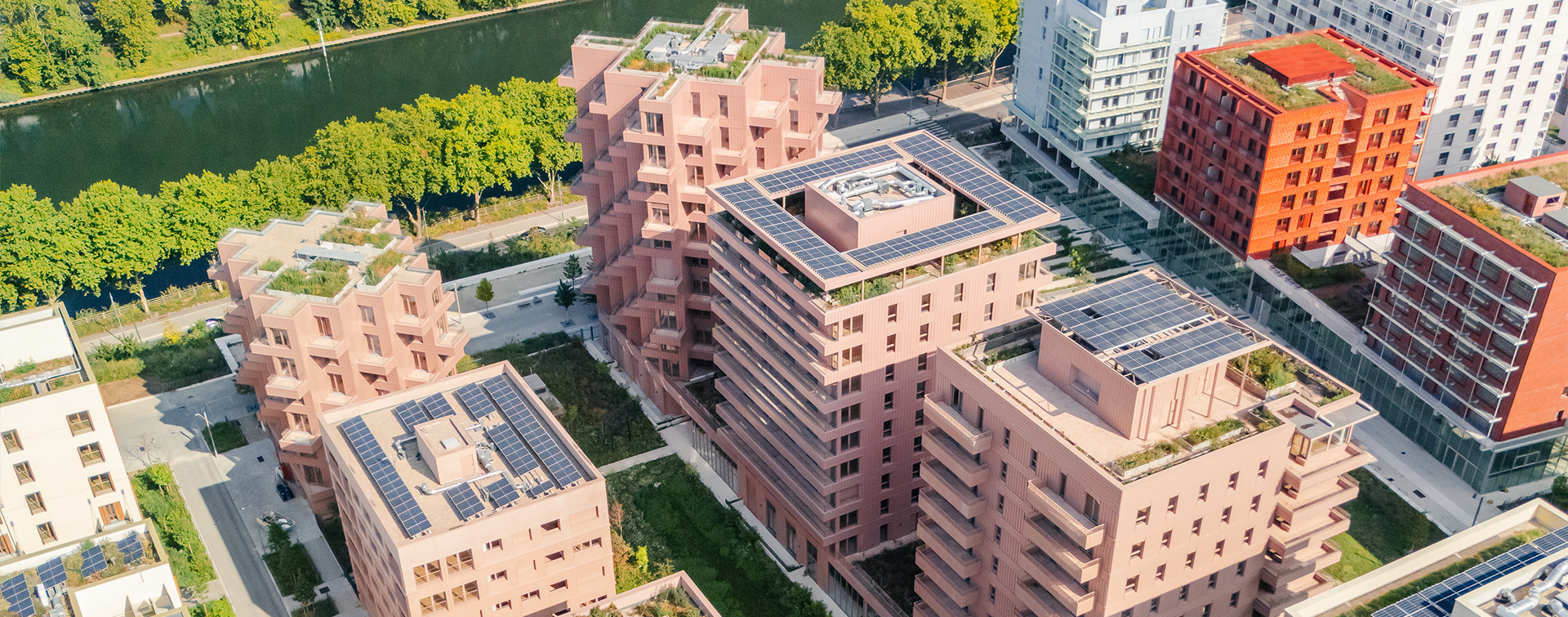
Designed from the outset as a permanent neighborhood rather than pop-up infrastructure, the Athletes’ Village embodies a deliberate approach to reversibility on a large scale. Spanning 52 hectares in Saint-Denis, Saint-Ouen-sur-Seine, and Île-Saint-Denis, it housed 14,500 athletes and support staff, as well as 9,000 para-athletes during the Paris 2024 Olympic and Paralympic Games, before immediately entering its transformation phase. Right from the design stage, the buildings were designed to be repurposed without major alterations. The temporary accommodation was designed to be converted into nearly 2,800 permanent homes, complemented by a student residence, offices, shops, school facilities, and green areas. This reversibility is based on specific construction choices: structural frames compatible with residential use, removable interior partitions, envelopes sized for future uses, and the incorporation of timber structures on some plots. Today, the conversion is under way: the site is set to welcome around 6,000 residents, confirming that this village was designed from the outset to become a true city neighborhood.
4. Keep materials in circulation for as long as possible
Conserving non-renewable resources also means keeping materials in use after they are first installed. The circular economy promotes the reuse, repair and repurposing of building components to reduce the demand for virgin materials.
Disassembly by design and material traceability facilitate the recovery of materials at the end of their life cycle. When a building is renovated or demolished, some components can be reused in new projects, extending their useful life and reducing the overall environmental impact.
See also:
This approach transforms buildings into resource banks, in which materials retain both economic and functional value. It helps secure supplies of raw materials amid growing pressure on certain critical resources.
5. Reduce waste through a systemic approach
Waste reduction is a direct result of resource conservation. Designing sustainable, adaptable buildings that can be disassembled makes it possible to significantly reduce the amount of waste generated throughout their lifecycle.
The circular approach prioritizes the avoidance of waste rather than waste management after the fact. It promotes practices such as renovation, reuse, and maintenance, which keep materials within the economic system rather than sending them for disposal.
This strategy helps to reduce pressure on waste treatment infrastructure and limit the associated environmental impacts, while improving the overall efficiency of the construction sector.
6. Secure access to resources amid growing pressure
The conservation of non-renewable resources is also a strategic issue for the European economy. By reducing dependence on the extraction and importation of raw materials, circular models help strengthen the resilience of supply chains.
Reusing existing materials and extending their lifespan helps reduce exposure to fluctuations in raw materials markets, while ensuring access to the resources needed for construction. This approach offers a concrete solution to the challenges of economic sovereignty and cost stability.
By incorporating circularity into the construction sector, it becomes possible to balance economic performance with resource conservation, while anticipating the risks associated with resource scarcity.
Sand, a natural resource under pressure 
In the construction sector, sand has come under severe pressure, a resource caught between economic and environmental dynamics. The second most exploited natural resource after water, it is essential for concrete, glass, and infrastructure, while global demand has tripled in twenty years due to rapid urbanization and major projects, particularly in Asia. However, this resource is not renewable on a human timescale: usable sand comes from rivers, beaches, or fragile sea beds, and takes thousands of years to form, while desert sand is unsuitable for construction. Large-scale extraction causes major environmental impacts, such as coastal erosion, destruction of ecosystems, and disruption of hydrological balances. This growing pressure has encouraged the development of recycling channels for construction waste, with aggregates being able to follow treatment processes similar to those used for natural granular materials. However, recycled sand currently accounts for just over 5% of the volumes used in construction worldwide.
7. Create economic value through reduced consumption
Contrary to popular belief, conserving non-renewable resources does not mean slowing down economic activity. In fact, circular strategies applied to construction pave the way for new models of value creation.
Activities related to renovation, maintenance, repair, and reuse create local jobs that cannot be relocated outside the region. They promote the development of new skills and strengthen local economic ecosystems.
By making the most of existing resources rather than relying solely on extraction, the construction sector can contribute to higher-quality growth based on usage, durability, and long-term performance.
8. Incorporate nature and ecosystems into construction
The conservation of non-renewable resources is closely linked to the protection of natural ecosystems. By limiting the extraction of raw materials and land take, circular strategies help preserve biodiversity and ecosystem services.
The design of buildings and neighborhoods that incorporate nature-based solutions also contributes to this approach. By strengthening the connection between the built and natural environments, it becomes possible to reconcile urban development with ecosystem regeneration.
This approach broadens the concept of a building’s value by incorporating environmental, social, and health benefits that go beyond simple economic performance.
9. Create a framework for collective action
The transition to construction practices that conserve non-renewable resources depends on the collective efforts of all stakeholders in the sector: designers, developers, investors, local authorities, and manufacturers. Regulatory and financial frameworks play a key role in encouraging the widespread adoption of circular practices.
By supporting renovation, reuse, and sustainable design, public policies can accelerate the sector’s transformation and create an environment conducive to innovation. Investors, for their part, have increasing opportunities to channel capital toward more resilient and sustainable projects.
This collective effort makes it possible to move beyond isolated initiatives and place resource conservation on a structural and sustainable path.
Conclusion – Building better, building to last
Building while conserving non-renewable resources is no longer an abstract goal, but a concrete and actionable path forward for the construction sector. Through circularity, making the most of existing resources, long-term sustainability, and efficient use of materials, it becomes possible to meet construction needs while minimizing the pressure on resources.
This transformation offers a positive response to today’s environmental, economic, and social challenges. It enables the building sector to play a central role in the transition to a more resilient economy, capable of creating value while respecting natural limits. Building differently means building to last and conserving the resources, on which our collective prosperity depends, for future generations.
This summary is based on analyses from the Building Prosperity report, published in 2024 by the Ellen MacArthur Foundation.
Further reading:
Figure Out Episode 1: Circularity
Copyright: Bilanol