
 ›
Politics and economics
›
2026 Sustainable Construction Barometer: Industry Trends Revealed
›
Politics and economics
›
2026 Sustainable Construction Barometer: Industry Trends Revealed 
 9 min
9 min
Share

Écouter cet article
La version audio est fournie par Trinity Audio. Son activation dépose des cookies permettant de vous identifier de manière persistante. En savoir plus

KEY TAKEAWAY 1
Sustainable construction: now an established concept, but unevenly adopted
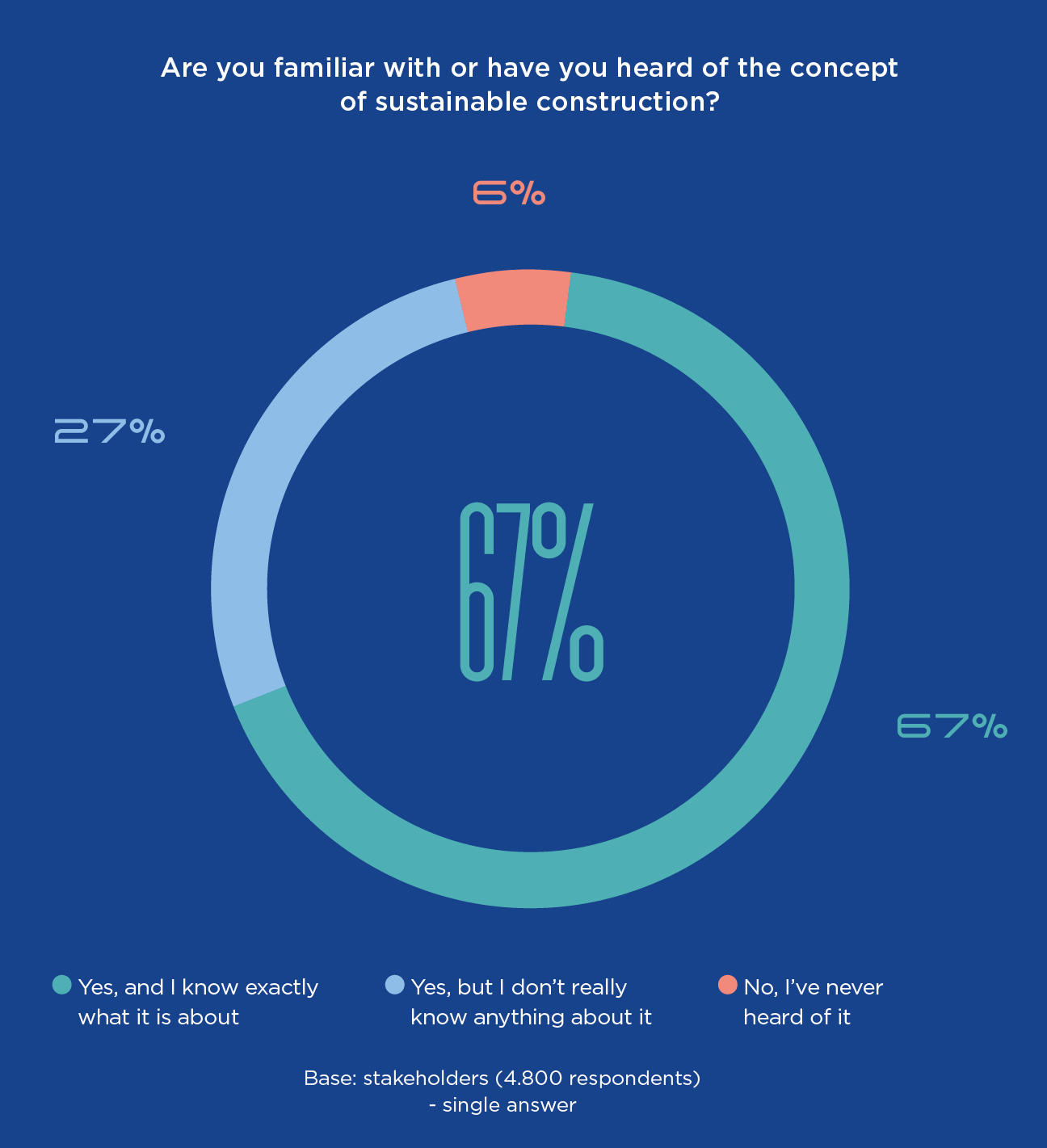
Sustainable construction is now a widely recognized concept. 67% of stakeholders and 39% of citizens say they understand what the concept entails; 94% and 84% respectively are at least aware of it.
However, this widespread recognition coexists with significant variations across regions and countries. Stakeholder awareness remains lower in Asia-Pacific (58%) than in the Middle East (75%), and there are sometimes considerable differences within the same region: in Europe, the gap between Romania (86%) and Czechia (40%) illustrates the difference in maturity between countries in the same area.
Among citizens, familiarity with the concept remains socially differentiated,and is higher among young people and university graduates.
KEY TAKEAWAY 2
Resilience gaining ground, benefits to be better highlighted to keep up the momentum
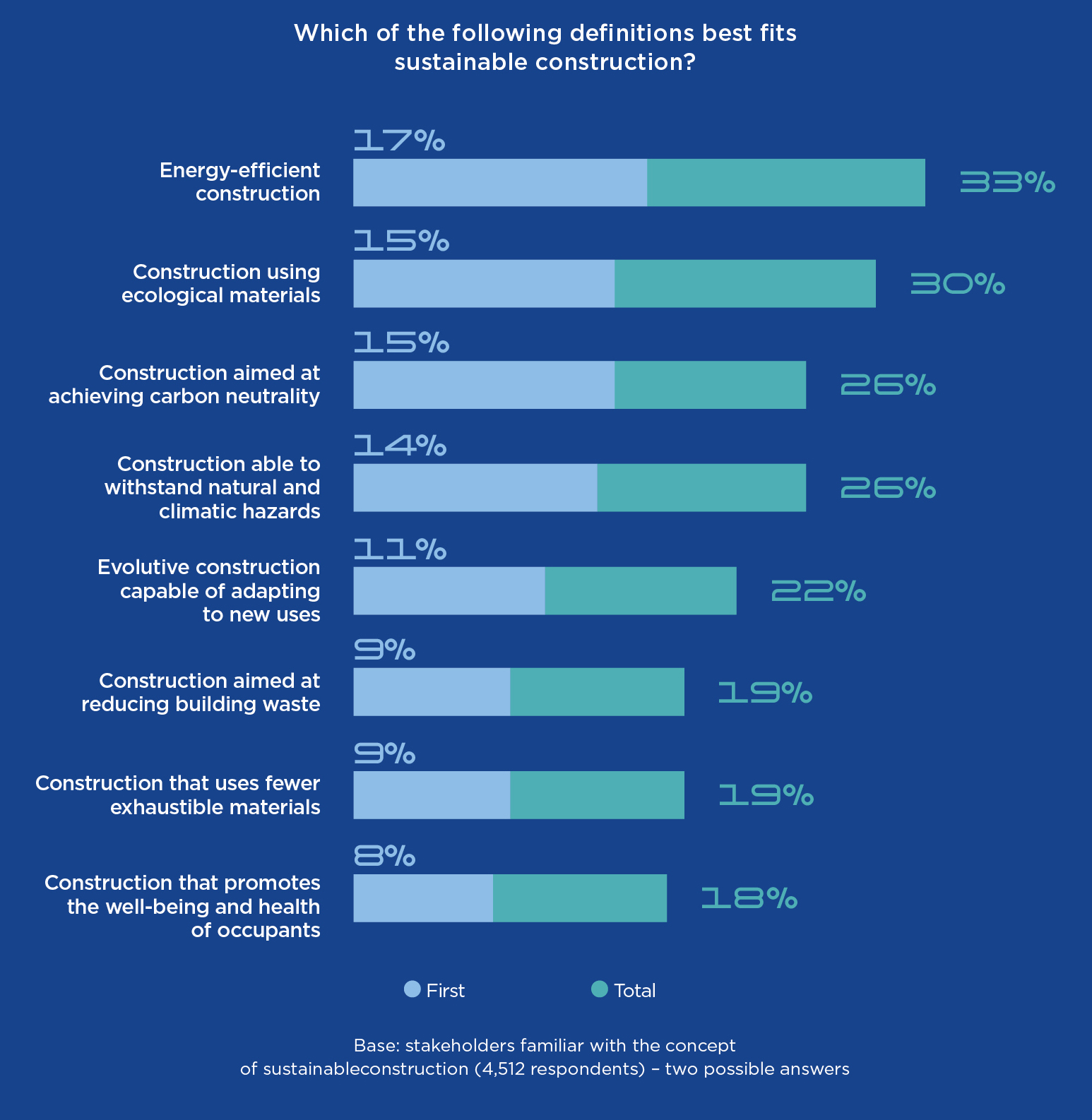
Among the criteria cited to define sustainable construction, resilience continues to gain ground. After a sharp increase in the previous edition (up 8 points between 2024 and 2025), it gained another 5 points this year among both stakeholders and citizens, with a particularly strong importance in Africa and the Middle East, regions already exposed to extreme climates.
Interviews with financial stakeholders highlight the growing attention paid to resilience, while also emphasizing the need to clarify its definition and demonstrate a clear return on investment.
KEY TAKEAWAY 3
The value of sustainable construction: a central issue
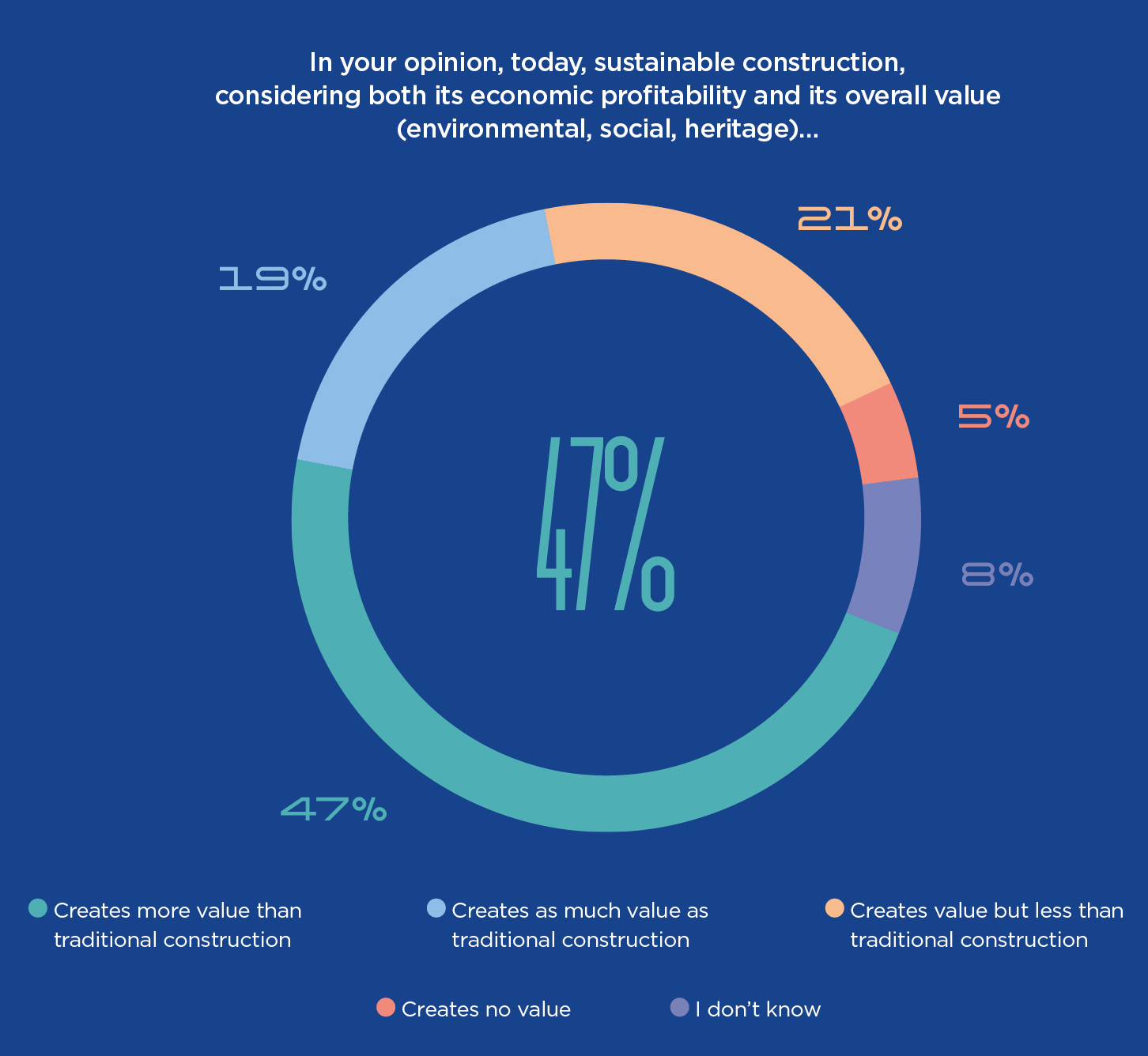
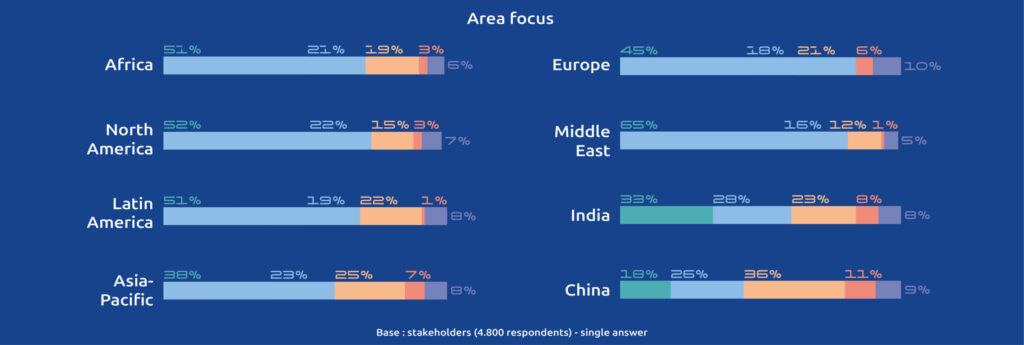
Beyond knowledge of sustainable construction, the question of value proves decisive. 47% of stakeholders believe that sustainable construction creates greater value than traditional construction (a new question in 2026). This perception is weaker in some regions (38% in Asia-Pacific, 45% in Europe) and among elected officials, with only 34% saying they are convinced.
The competitiveness of solutions remains perceived as a crucial driver for fast-tracking sustainable construction: as in the previous edition, it is cited by nearly one in three stakeholders. Furthermore, respondents in favor of “turning the clock back” (a minority opinion, representing only 6% of stakeholders) mainly cite excessive costs and a lack of performance guarantees for users.
This finding makes demonstrating value a central issue in promoting adoption based on buy-in rather than compliance alone. It’s no longer just a question of asserting the ambitions of sustainable construction. There is a need to prove its value, demonstrating tangible benefits, guaranteeing performance for users, and improving the competitiveness of solutions in order to become firmly established in decision-making by stakeholders.
KEY TAKEAWAY 4
Shared intentions, but limited action so far
There is broad consensus on the need to speed up: 87% of stakeholders believe that there is a need to go further. Stakeholders upstream in the value chain (architects and engineering firms) continue to be identified as drivers (56%, stable), and the expected momentum is based on cooperation between stakeholders rather than on a single leader.
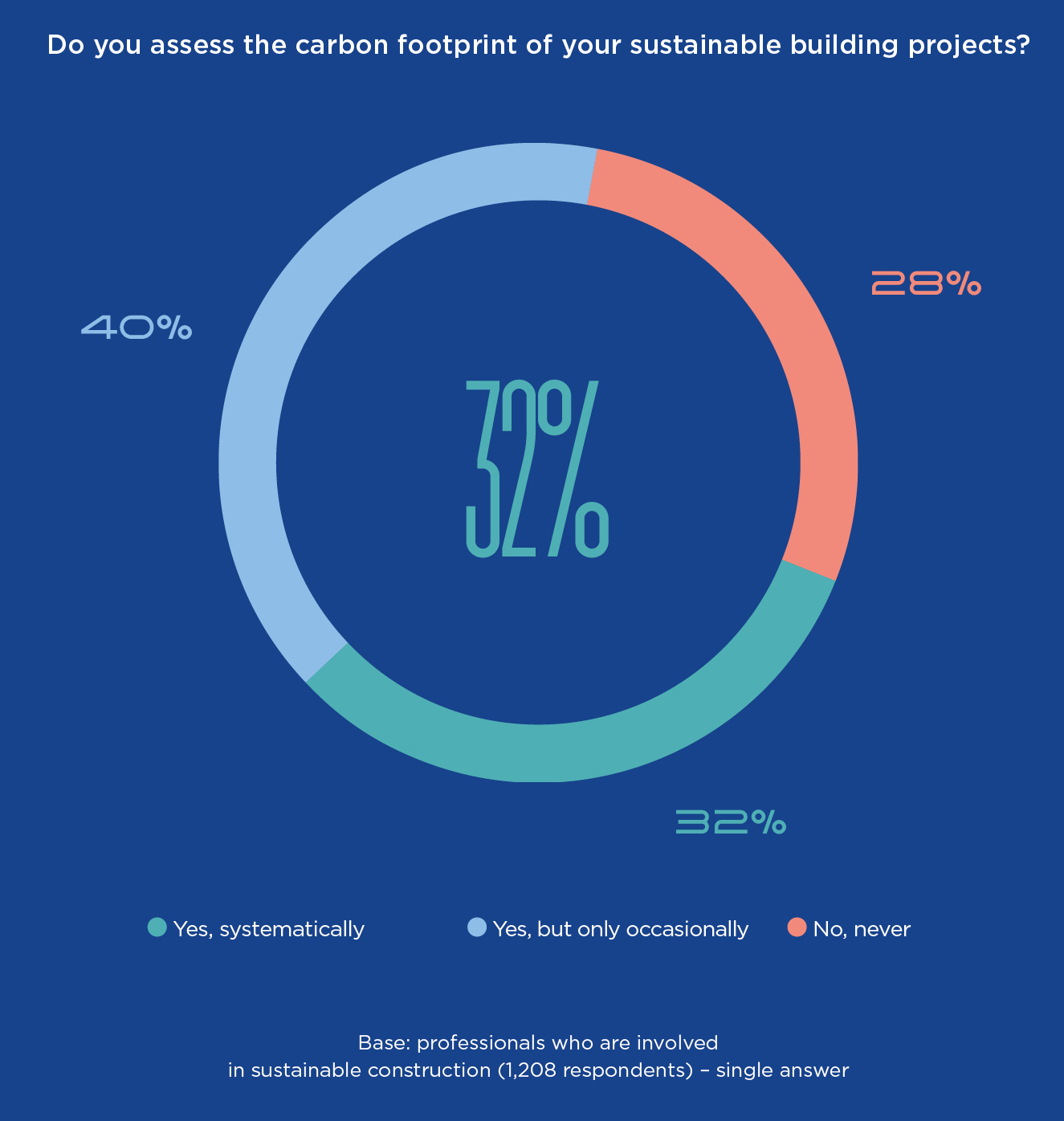
However, for the third year running, practices are struggling to keep up. Only 32% of professionals routinely assess carbon footprints and 30% say they already carry out sustainable projects, compared with 55% who say that they “intend to do so”. Among elected officials, sustainability has become less important as a criterion in the awarding of public contracts (86% compared with 98% in 2025). Among students and associations, good intentions still weigh heavier than taking action: 78% of students value training in sustainable construction, but only 5% would categorically refuse a job offer from a company that is not committed to sustainability. 24% of associations have already boycotted unsustainable projects, while 50% might do so in the future.
KEY TAKEAWAY 5
Citizen buy-in as a driver to fast-tracking deployment?
The barometer also highlights the important role of citizens in acceleratingthe transition toward sustainable construction.
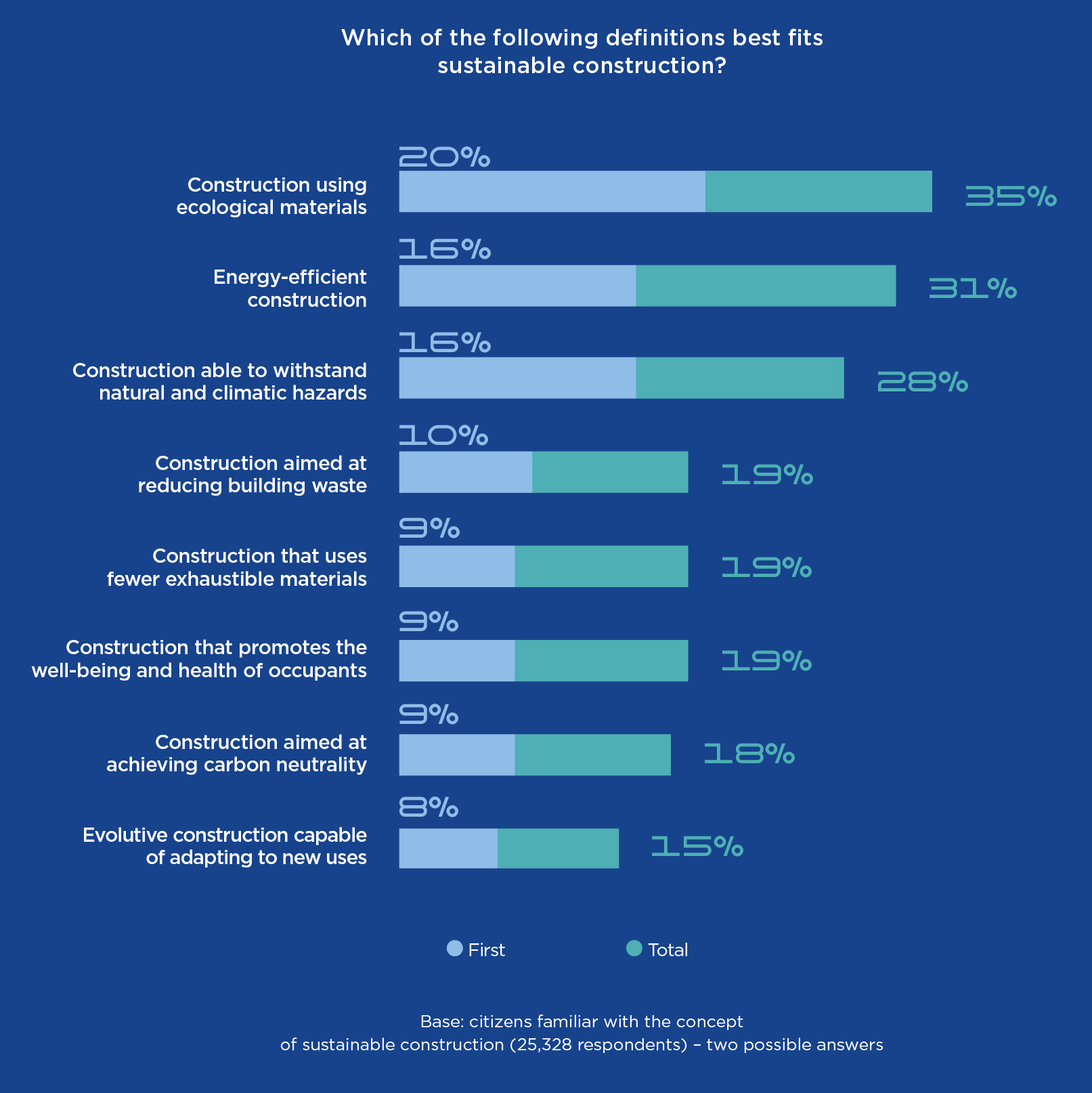
63% of citizens consider the development of more sustainable construction to be a priority, up 4 points from the previous edition. Citizens are also paying increasing attention to the health and well-being benefits for occupants: 19% of citizens now include this aspect in their definition of sustainable construction (up 4 points), particularly in Africa and Asia-Pacific, where more than one in four citizens cite this issue.
Furthermore, nearly one-third of citizens and stakeholders believe that raising public awareness is essential to stepping up progress.
FOCUS
Competitiveness, awareness-raising, and alignment of stakeholders at the top of the agenda
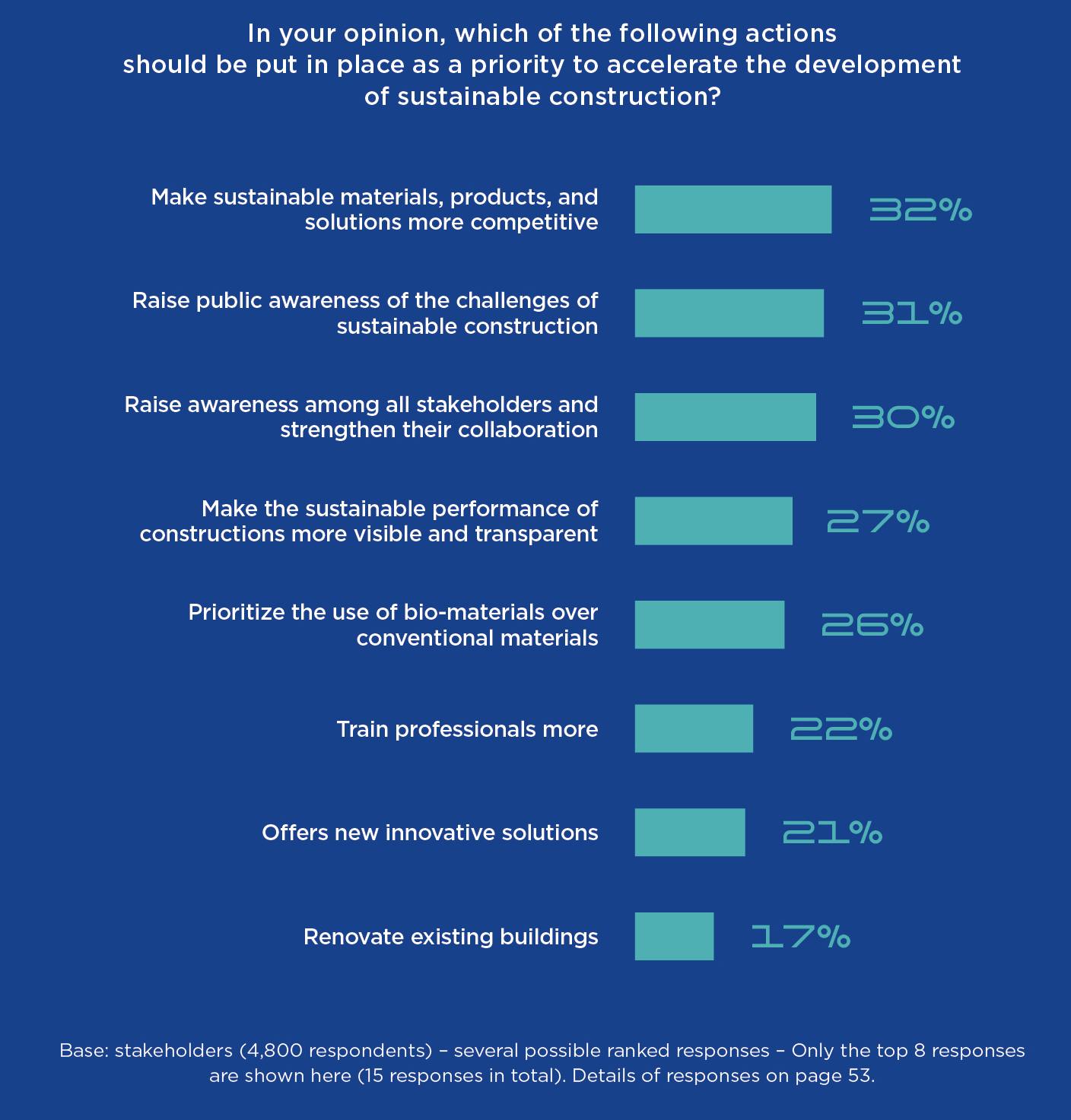
Like last year, nearly one in three stakeholder respondents cites two priority drivers for fast-tracking the sector’s transition: strengthening the competitiveness of sustainable solutions (32%) and raising awareness among the general public (31%) and stakeholders (30%).
These two signals suggest that proposing new solutions (21%) is less important than providing the right conditions for deploying solutions that are already available.
This means improving affordability while facilitating widespread adoption across the entire value chain (specifiers, financiers, contractors, users).
While there is broad consensus on the priorities, regional differences nevertheless emerge: renovation is more to the fore in Europe (25%), while there is stronger interest in biomaterials in Asia-Pacific (32%).
Methodology
The 2026 Sustainable Construction Barometer study was carried out between 16 October and 14 November 2025 among a sample of 4,800 individuals from 30 countries: Argentina, Brazil, Canada, China, Colombia, Czechia, Egypt, Finland, France, Germany, India, Indonesia, Italy, Kenya(1), Malaysia(1), Mexico, Morocco, Norway, Poland, Portugal, Romania(1), Saudi Arabia, South Africa, Spain, Switzerland, Türkiye, United Arab Emirates, United Kingdom, United States and Vietnam. This panel, which answered a self-administered online questionnaire, is broken down as follows:
- 1,500 professionals (construction and public works, architecture, housing, professional organizations in the building trades, energy, industry, construction waste management)
- 1,500 students (construction, building and public works, civil engineering, architecture, spatial design)
- 1,200 members of associations (ecological transition, housing, construction, energy, climate change, circular economy)
- 600 local elected officials or local government representatives (in the UAE and Saudi Arabia, in the absence of local elected officials, representatives of the public authorities were interviewed). Specific study method: questionnaire administered by telephone.
In addition, 30,000 citizens aged 18 and over in 30 countries were also surveyed: 1,000 individuals per country (representative sample). Online omnibus questionnaire.
(1) New countries in 2026.
Photo credit : Dimitri Weber