
 ›
Decarbonization
›
Tradition at the Heart of Contemporary Responses
›
Decarbonization
›
Tradition at the Heart of Contemporary Responses 
 4 min
4 min
Share

Écouter cet article
La version audio est fournie par Trinity Audio. Son activation dépose des cookies permettant de vous identifier de manière persistante. En savoir plus

MUD BRICK / ADOBE
Mud is one of the oldest building materials in the world. When molded and dried in the sun, it becomes adobe, which has been used for centuries in Africa, Latin America, the Middle East, and Asia for its thermal and acoustic insulation properties.
Also Read: Reducing construction’s environmental consumption in the countries of the South
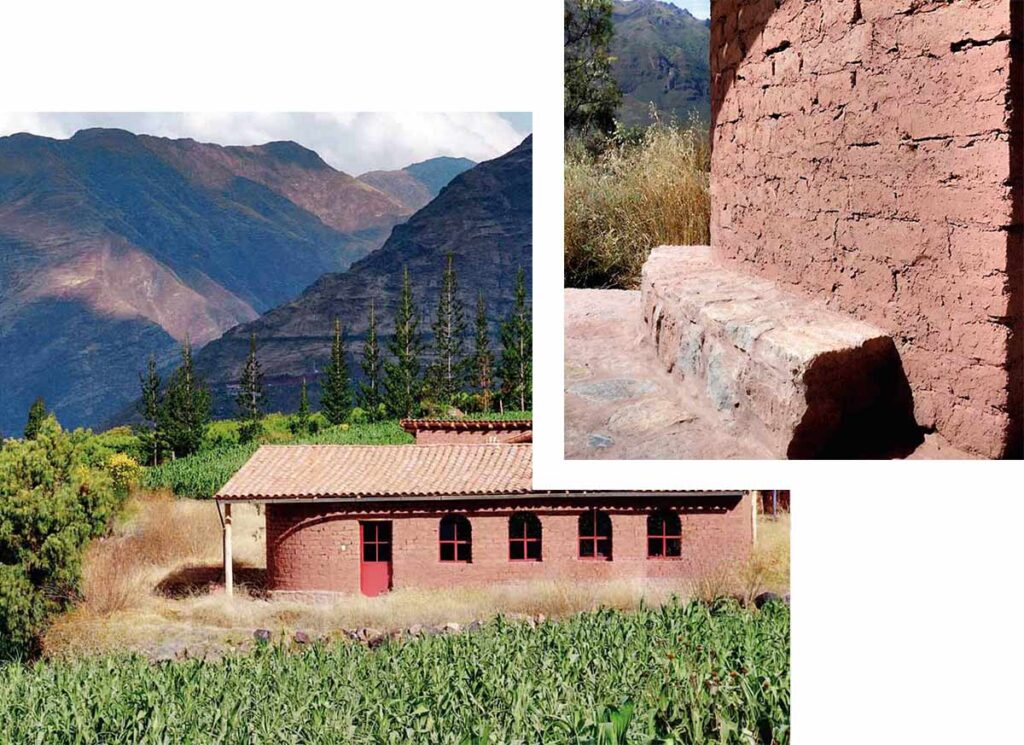
In Taray (Peru), the Quincho Bernarda Community Center is dedicated to gatherings and group activities. Built in exposed adobe, it shows how this traditional material can be used today to create contemporary spaces that are suited to the climate and culture of the Andes.
GREENED ROOFS
Long associated with vernacular architecture in northern Europe, greened roofs are now recognized as solutions for climate adaptation and comfort. By combining vegetation and substrate, they improve thermal comfort through shading, thermal inertia, and evapotranspiration, while helping to stabilize indoor temperatures and contributing to acoustic comfort. They are now deployed in cities such as Copenhagen, Berlin, Basel, Paris, and Vienna, as well as New York and Chicago. In India, pilot projects are emerging in Delhi and Bengaluru, supported by public initiatives and international climate financing.
Also Read: Storms, floods, heatwaves, fires… Building façades are innovating to rise to the challenge
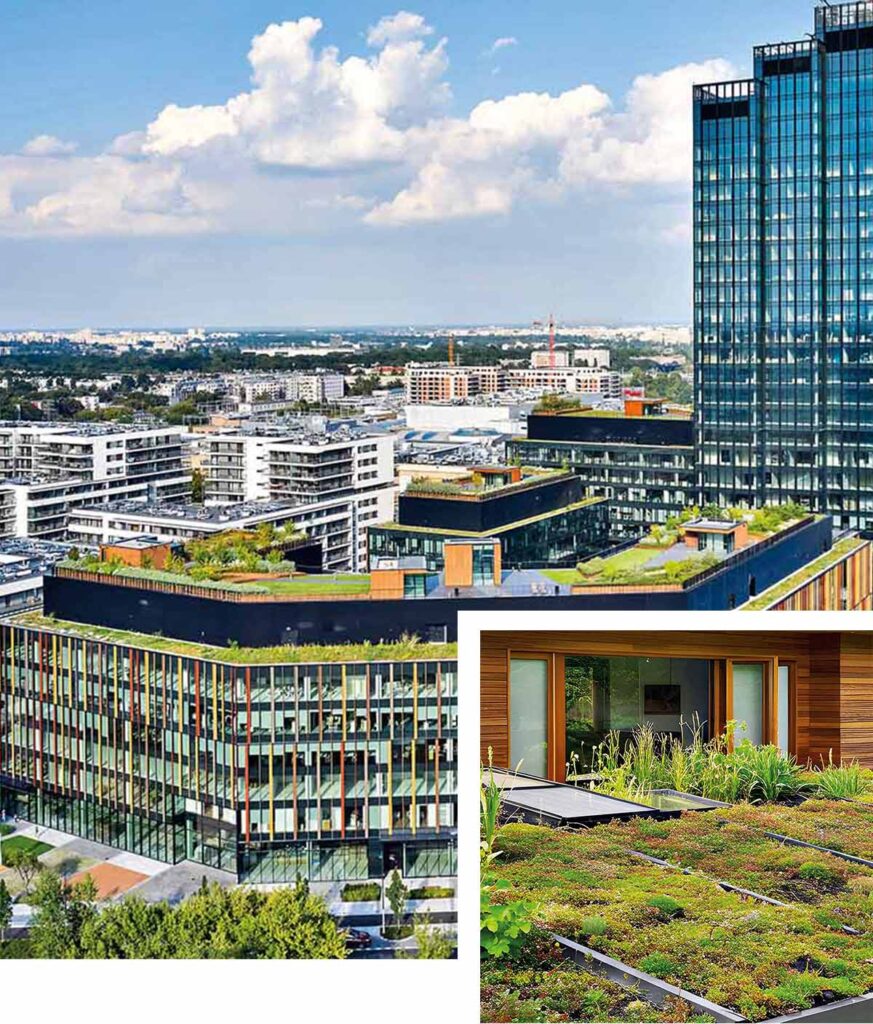
Opened in 2022, the Forest Campus in Warsaw (Poland) continues to make its mark as an esthetic and technical success story, particularly with its roof garden. ©Saint-Gobain Glass
BAMBOO
Both lightweight and exceptionally strong, bamboo is a bio-sourced material that is increasingly sought after in construction. Its rapid growth and high capacity for renewal give it a low carbon footprint, while its fibrous structure contributes to the natural regulation of indoor temperature and humidity. Initially adapted to hot and humid climates, bamboo solutions are now being explored in a variety of contexts, from Europe to South Asia.
Also Read: Climate Change: six startups revolutionizing the construction Industry
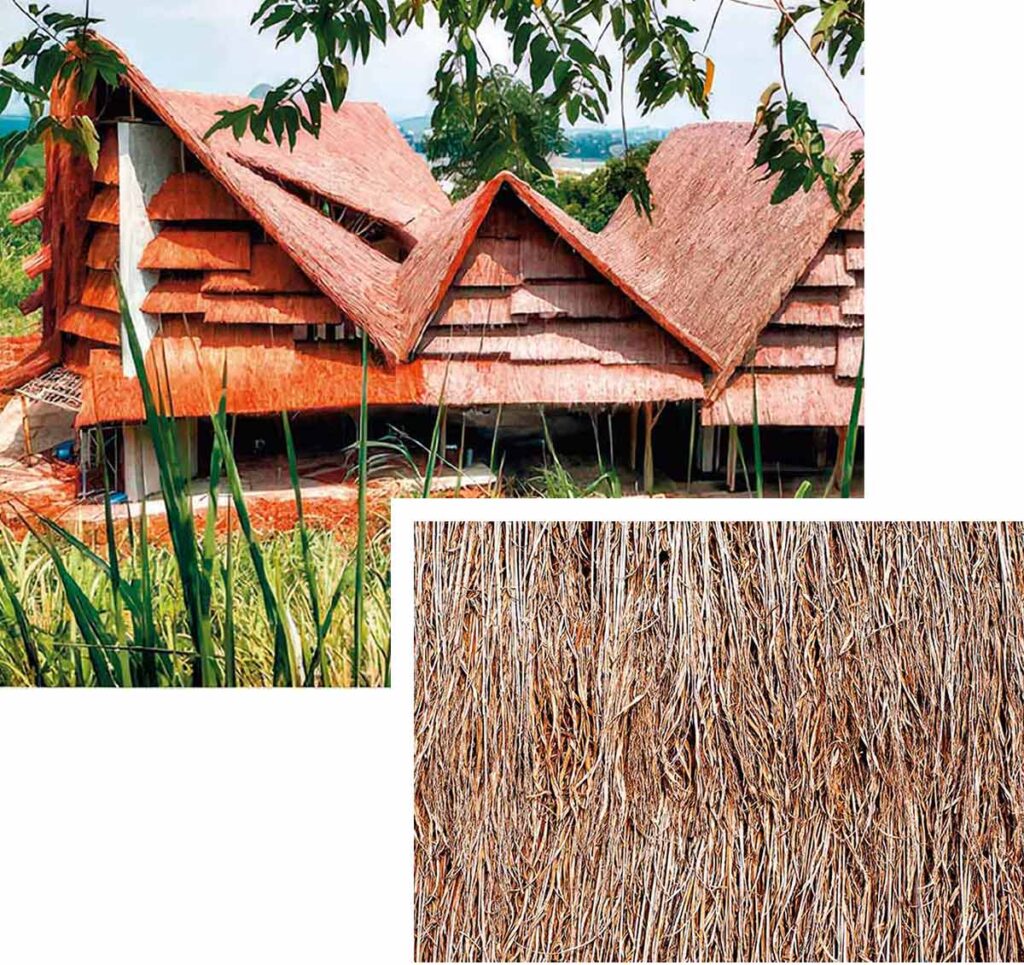
The Lam Son Multipurpose Community Center (Vietnam) was designed by architect Hoàng Thúc Hào, a leading figure in sustainable architecture in Asia and winner of the 2025 Global Award for Sustainable ArchitectureTM. With a bamboo and concrete frame, this building showcases the structural strength of bamboo. ©1+1>2 Architects
MASHRABIYA SCREENS
An iconic feature of Middle Eastern architecture, the mashrabiya is an openwork screen that provides shade, natural ventilation, and visual privacy. By filtering light and limiting direct exposure to the sun, it contributes to the passive thermal comfort of the building while promoting air circulation. Historically used in Egypt, India, and the Arabian Peninsula, it is often combined with other vernacular climate control systems, such as the windcatcher (malqaf), to cool indoor spaces without the use of air conditioning. Today, there are numerous contemporary reinterpretations of the mashrabiya.
Also Read : Is a world without air con possible?
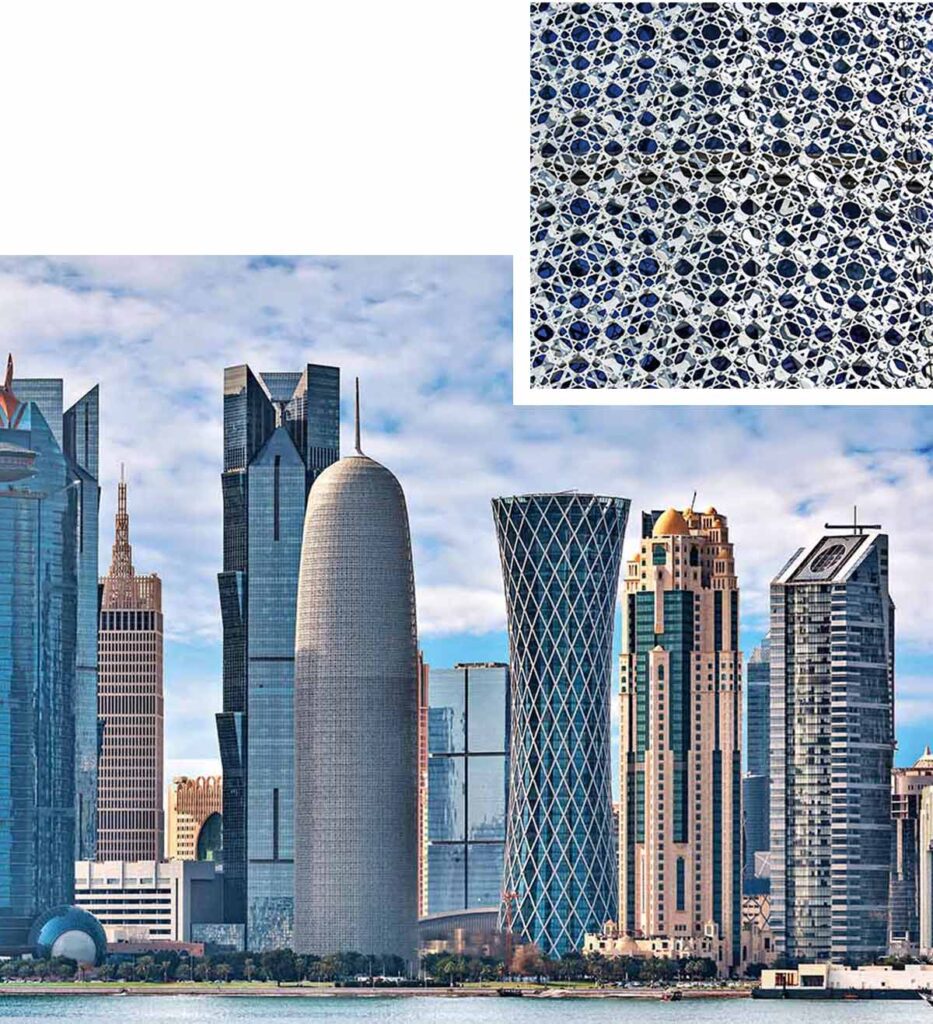
In Qatar, the Doha Tower (Burj Doha), designed by Jean Nouvel, features a metal lattice façade inspired by mashrabiya screens.
Read also our joint interview:
“ Do we need to reinvent everything to build sustainably ? ”
To Go Further:
The 5 winners of the 2026 Global Award for Sustainable Architecture™
“For too long, architects have aimed for beauty and aesthetics. We need to change the paradigm.”
Circularity: Is Soil the New Construction Goldmine?
Earthquake in Morocco, Rebuilding on Ruins
KEYNOTE INTERVIEW : How can we rebuild in areas hit by urbicide?