
“How can we work with the resources already present in the city?” – Mark Sexton

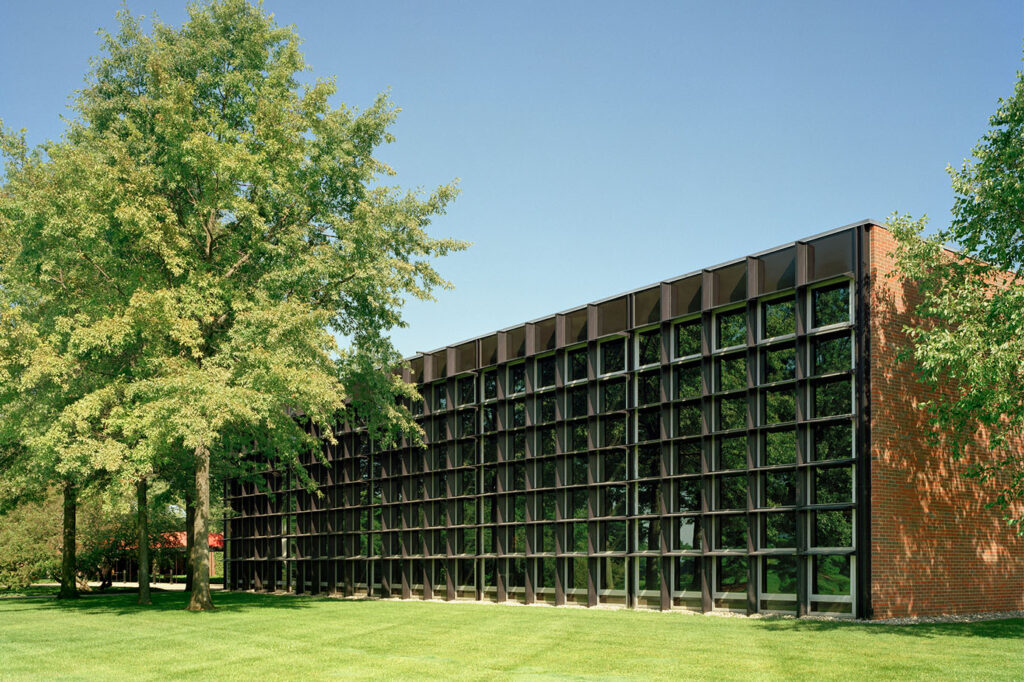
Pour la rénovation du bâtiment C1 de Herman Miller, dans le Michigan (États-Unis), Krueck Sexton Partners a conservé le bâtiment existant tout en révélant sa structure en acier d’origine et en intégrant des finitions à forte teneur en matériaux recyclés. De nouveaux systèmes mécaniques et électriques ainsi qu’un éclairage à haute efficacité énergétique ont permis de réduire la consommation d’énergie de 30 %, selon l’agence. Crédit : Mariusz Mizera
 ›
Circularity
›
“How can we work with the resources already present in the city?” – Mark Sexton
›
Circularity
›
“How can we work with the resources already present in the city?” – Mark Sexton 
 8 min
8 min
Share

Écouter cet article
La version audio est fournie par Trinity Audio. Son activation dépose des cookies permettant de vous identifier de manière persistante. En savoir plus
For Mark Sexton, co-founder of Chicago-based architecture firm, Krueck Sexton Partners, the future of cities begins with making better use of what is already there: buildings, infrastructure, natural systems and, above all, the social ecosystems that bring cities to life. He advocates for architecture centered on reuse, experimentation, and connection. His ultimate measure of sustainability is surprisingly simple: to create places people love enough to preserve.

What is your personal relationship with cities? What makes a city a place where you enjoy living?
For me, a city is a social ecosystem. And like every ecosystem, it needs balance. It needs the ability to grow, to decay and to foster new things.
Chicago illustrates this very clearly today. Our firm is one of three architecture firms working with the Chicago Architecture Center to explore how the Loop, the city’s central business district, could be revitalized.
The Loop was extraordinarily efficiently designed around a 20th-century model: people came in from the suburbs, worked in offices five days a week and then left. But that ecosystem has fundamentally changed. Remote and hybrid working means that we are not going back to the five-day office week. When you remove two days of activity every week, restaurants, stores and all the services that depend on office workers suffer as well. So, the question is not how to bring the old city back. It is how to adapt the city to a new reality.
That is what fascinates me about cities: they are living organisms. They are constantly changing and evolving.
What are the main sustainability challenges that cities need to address?
First, sustainability is about longevity. We often focus on energy consumption and other technical benchmarks, and those matter. Yet ultimately, the most sustainable thing you can do is get a building to be loved. If people love a building, they will take care of it and keep it in use, preserving all the energy, labor and resources that went into creating it. Herman Miller’s Building C1 in Michigan is a good example: a valued mid-century building that was reinvested in and adapted for the future rather than replaced.
Another key challenge is making better use of what is already there. I believe adaptive reuse is the future of architecture. Tearing down buildings, removing their foundations and rebuilding everything in a different form is, in many cases, a 20th-century approach.


International Square Food Market in Washington, D.C., is a good example. It is a large office building above one of the city’s busiest Metro stations, with a huge, covered atrium at its center. When we started working on it, the atrium was essentially a utilitarian, empty space that people simply used to cut through the block; this wasn’t a place people would gather.
In our discovery process, we learned that the building already had large smoke-extraction fans on the roof, required for fire safety but rarely used beyond testing. So, we asked: why not use what is already there?
We combined those existing fans with large operable doors to naturally ventilate the atrium in lieu of relying on conventional air conditioning. The fans require only a fraction of the energy used by mechanical cooling. In a way, we were rediscovering a concept that buildings did naturally for hundreds of years.
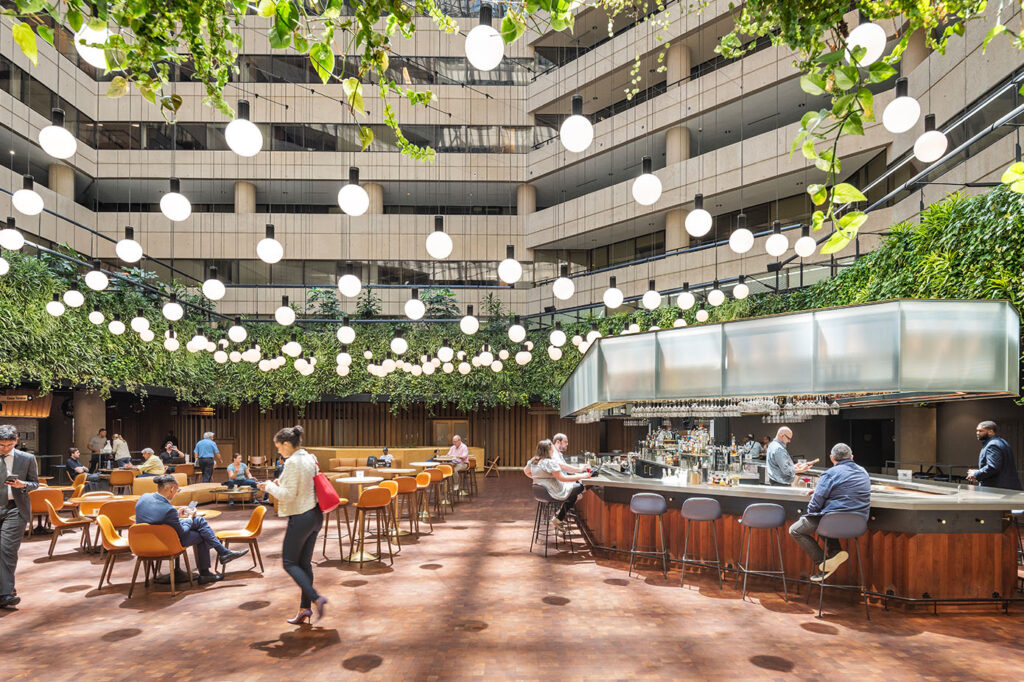
Opening the building to the street also transformed the relationship between inside and outside. The atrium became more inviting, a place where people could gather rather than simply pass through.
That is what adaptive reuse can achieve: reduce energy use, preserve existing resources and, at the same time, give a place a new social purpose.
How do cities influence your work as an architect? How do you take into account the context, identity, and resources specific to the city in which you are working?
One of the mistakes we make is to see something we love in another city and try to transplant it. People visit Paris and think, “I want that at home.” But you cannot simply reproduce Paris somewhere else. It is like taking a tree from the Pacific Northwest and planting it in Arizona: it will not thrive because the ecosystem is different.
Architecture has to grow out of the place itself: its resources, its environment and its social ecosystem. Authenticity matters enormously in architecture and urban design.
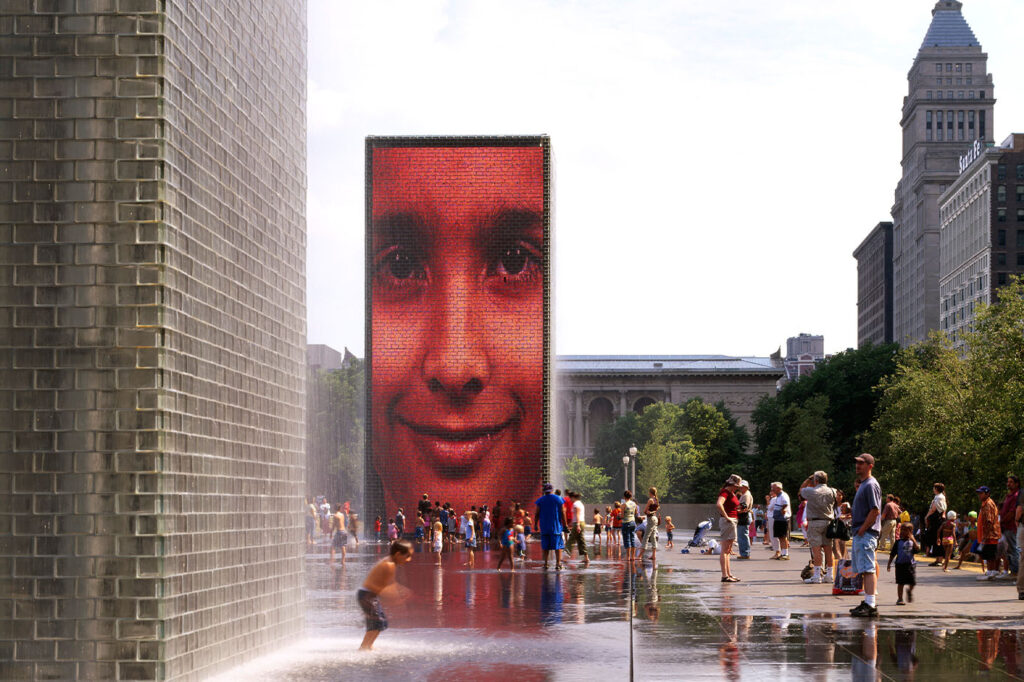
Millennium Park is a good example. The site was once a rail yard in the middle of the city. The idea was to build over the railway infrastructure and create an entirely new public space above it. The city brought together an extraordinary group of architects and artists — including Frank Gehry, Anish Kapoor, Jaume Plensa and Piet Oudolf — and gave them the freedom to create something unique to Chicago.
To what extent can architects help shape a city?
I think the architect’s role is to make imaginable something that previously seemed impossible.
That ability to transform what is already there is very important to me. Rather than simply replacing existing buildings, infrastructure or landscapes, architects can look at them differently and reveal possibilities that were previously overlooked.
In South Florida, for example, we worked on a site that had historically been part of the Everglades but had been covered with about two feet of gravel for development. Rather than accepting that condition, we removed the gravel, reused it as a base for the building and brought the Everglades back.
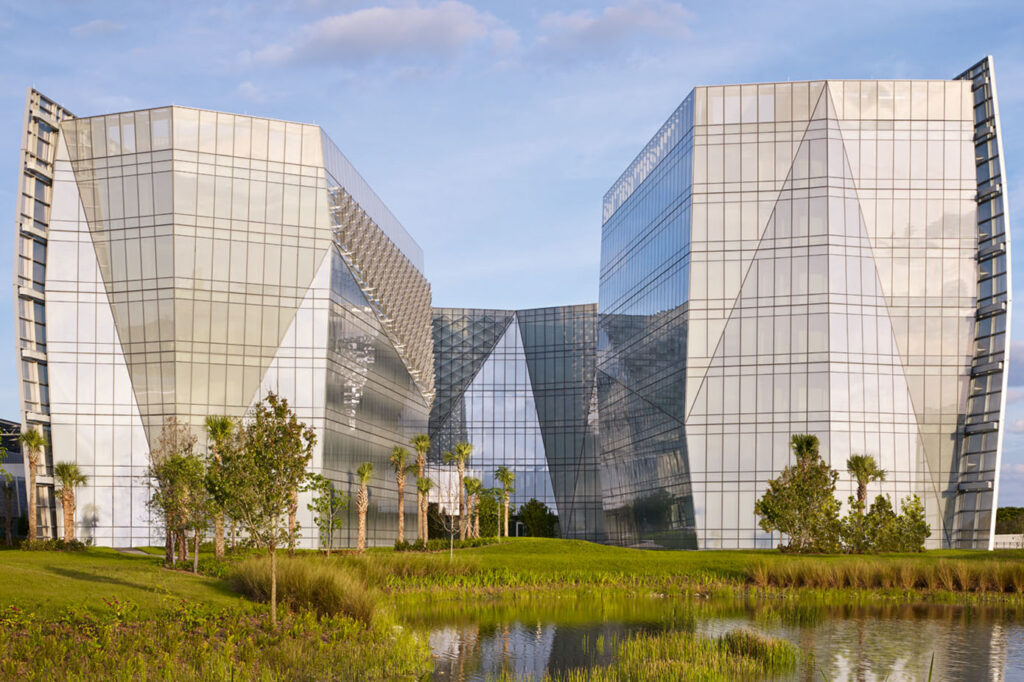
Land is one of the resources we abuse most. Roads and other infrastructure consume enormous amounts of it. The challenge is to find ways for the infrastructure we need to coexist with natural systems rather than simply replace them.
The question is increasingly: how can we work with the resources and systems that are already in the city, transform them and give them new value? That is one of the ways architecture can contribute to shaping more sustainable cities.
What do you need as an architect to fully play your role in shaping cities?
Architects cannot do it alone. Policy is extremely important: we can have great ideas, but without the right zoning, permitting and political support, many of them are difficult to implement.
There is also an enormous opportunity to work more closely with manufacturers. Manufacturers understandably develop products with a certain idea of how they will be used. Architects can come in and ask: “What if we used it differently?” That dialogue can open up completely new possibilities.
Architecture has a unique advantage: it is public. In cities, new ways of using materials become visible and can inspire others. Architects can see what has been achieved and think, “I didn’t know you could do that.” That is how innovation developed for one project can lead to new ideas and approaches elsewhere.