
Climate adaptation and resilience: What's the difference?

Torre Diana in Mexico City (Mexico) © Davis Arenas
 ›
Politics and economics
›
Climate adaptation and resilience: What’s the difference?
›
Politics and economics
›
Climate adaptation and resilience: What’s the difference? 
 5 min
5 min
Share

Écouter cet article
La version audio est fournie par Trinity Audio. Son activation dépose des cookies permettant de vous identifier de manière persistante. En savoir plus

Adaptation
Adaptation means changes made to a building, infrastructure, or project in order to adjust to new conditions (climatic, regulatory, technological, etc.). Its goal is to make the built environment compatible with current or foreseeable changes. Adaptation can be reactive or proactive: it can be planned in advance or implemented in response to a change.
Examples :
- Improving insulation to better withstand heatwaves or cold snaps.
- Elevating buildings in flood-prone areas.
- Using natural ventilation systems to reduce reliance on air conditioning.
- Use materials that are resistant to moisture or storms.
Resilience
Resilience goes a step further: it means designing or adapting a building so that it can withstand shocks, absorb impacts, and quickly recover after disruption (caused by a natural disaster, an energy crisis, etc.). It ensures the durability and functionality of the built environment, even during extreme or unforeseen events.
Resilience is a holistic approach: it takes multiple risks and scenarios into account, with a focus on longevity and the ability to bounce back. It combines climate adaptation, safety, and flexibility of use.
Examples :
- Hurricane-resistant structures.
- Redundant systems (electricity, water) to maintain supply during outages.
- Modular spaces that can be adapted to changes of use (e.g. to serve as shelters in a crisis).
- Energy self-sufficiency (solar panels, rainwater harvesting).
In conclusion: Adaptation is one component of resilience
Resilience encompasses adaptation but with the addition of robustness and flexibility in the face of unforeseen circumstances.
Examples :
- Adaptation of a building on the seashore could mean raising the ground floor (to protect against flooding.
- Resilience is achieved by combining this adaptation with corrosion-resistant materials, an independent power supply, and an evacuation plan.
Inspiring examples
Hurricane-resistant homes
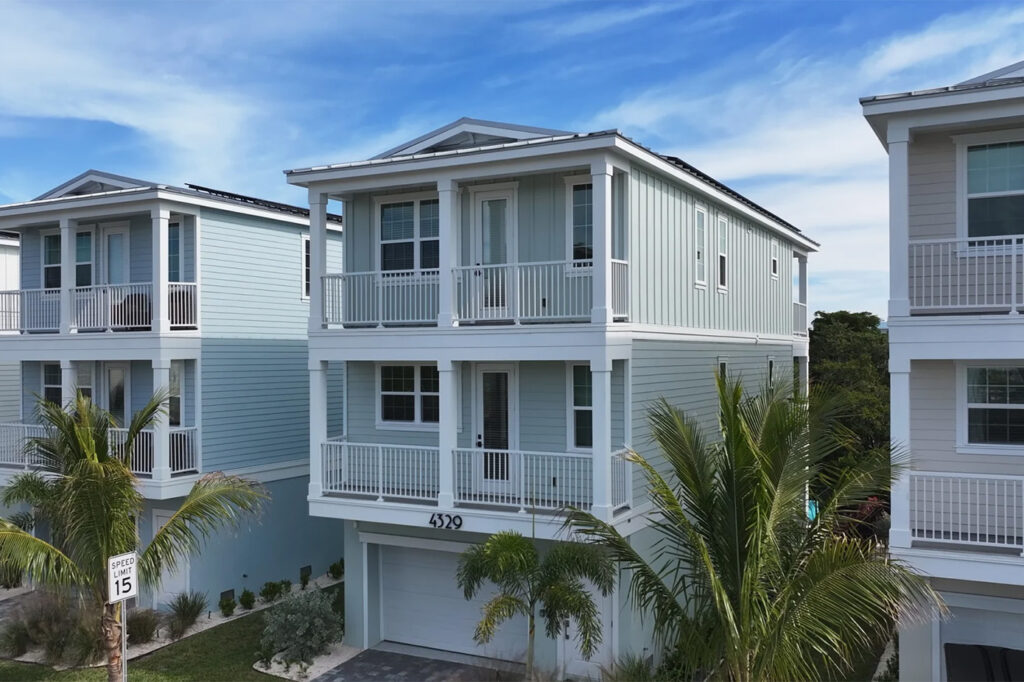
In 2024, as Florida faced the devastating impacts of Hurricanes Helene and Milton, communities across the state experienced severe flooding, destructive winds and prolonged power outages. Yet the homes at Hunters Point in Cortez remained unscathed.
Developed by Pearl Homes, Hunters Point comprises 86 homes that are both LEED certified (the internationally recognized certification assessing the environmental and energy performance of buildings) and engineered to withstand Category 5 hurricanes, the highest level on the Saffir–Simpson scale. Thanks to their sustainable and resilient design, insurers remain willing to cover these properties, even as climate-related disasters become increasingly frequent across Florida.
Beating the heat
Faced with more frequent heatwaves, increased water stress, and flood risks, Mexico City is adapting. The megacity of more than 22 million inhabitants is rallying around sustainable water management, revegetation, and strengthening the resilience of the most vulnerable neighborhoods, as part of its Climate Action Plan.
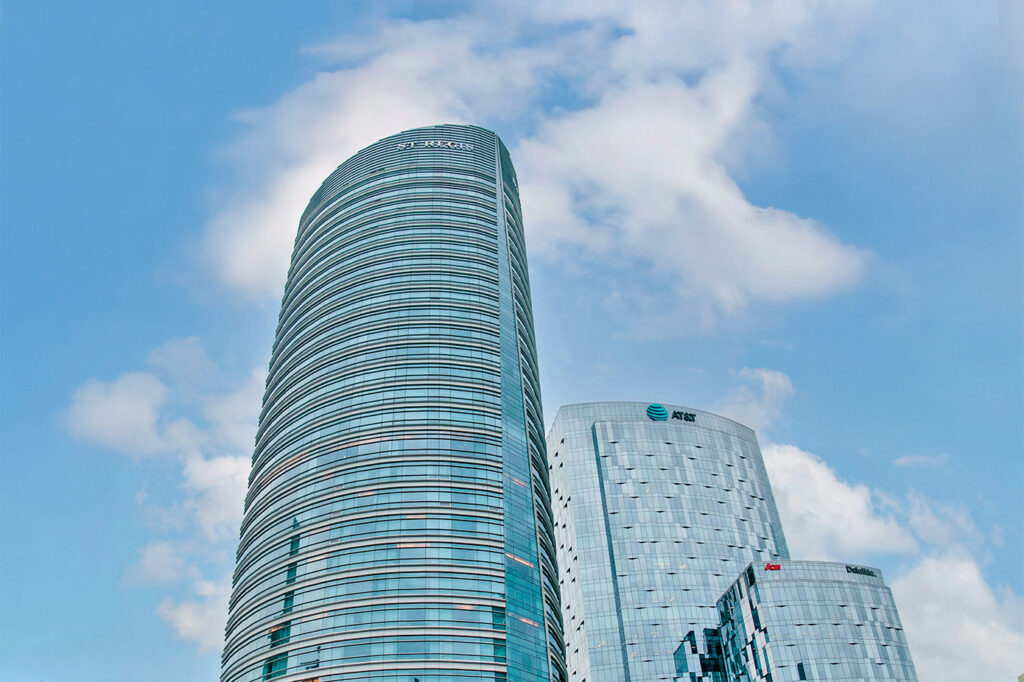
Some recent buildings illustrate this adaptation strategy, such as the Torre Diana tower. Built in 2024, this office block is equipped with a “double skin” façade, consisting of an inner concrete shell and an outer glass cladding that limits heat gain. The gap between the two skins serves to ventilate the building, to reduce the thermal load indoors.
Remaining open during storms
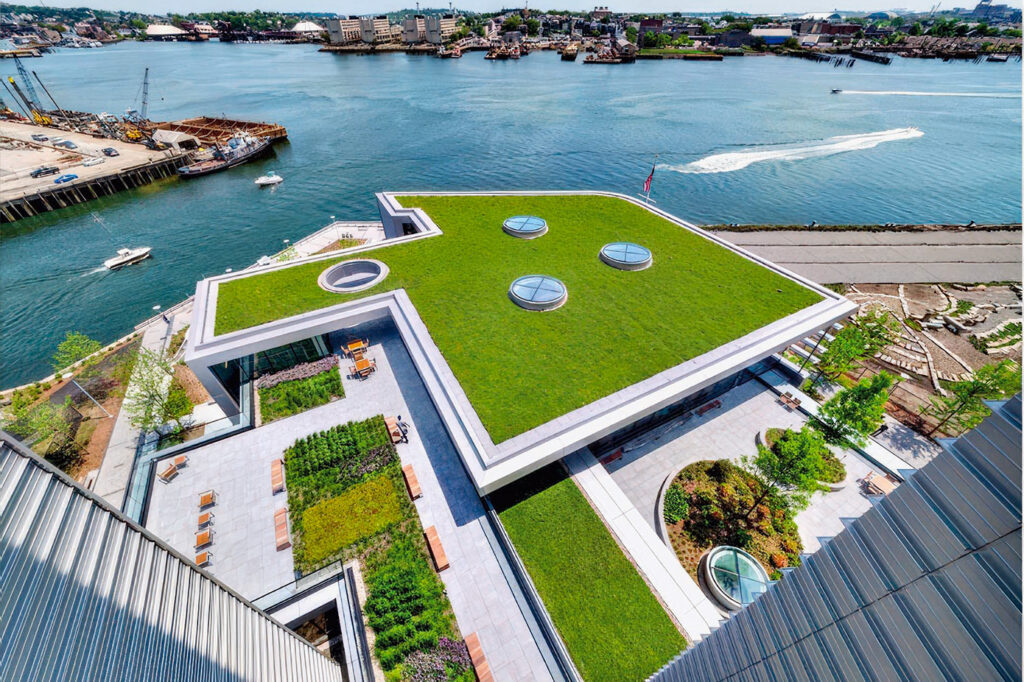
The Spaulding Rehabilitation Hospital has been designed to cope with increased risks of flooding and coastal storms. The building is elevated above the hundred-year flood level (the flood level that has a 1% probability of occurring, or being exceeded, in any given year), while the mechanical systems have been installed on the roof to ensure they continue to function in the event of flooding. Greened roofs limit rainwater runoff, mitigate the heat island effect, and help reduce cooling requirements. The reinforced envelope and high-efficiency equipment improve the continuity of use of the site during extreme weather events.
When the water recedes without causing damage
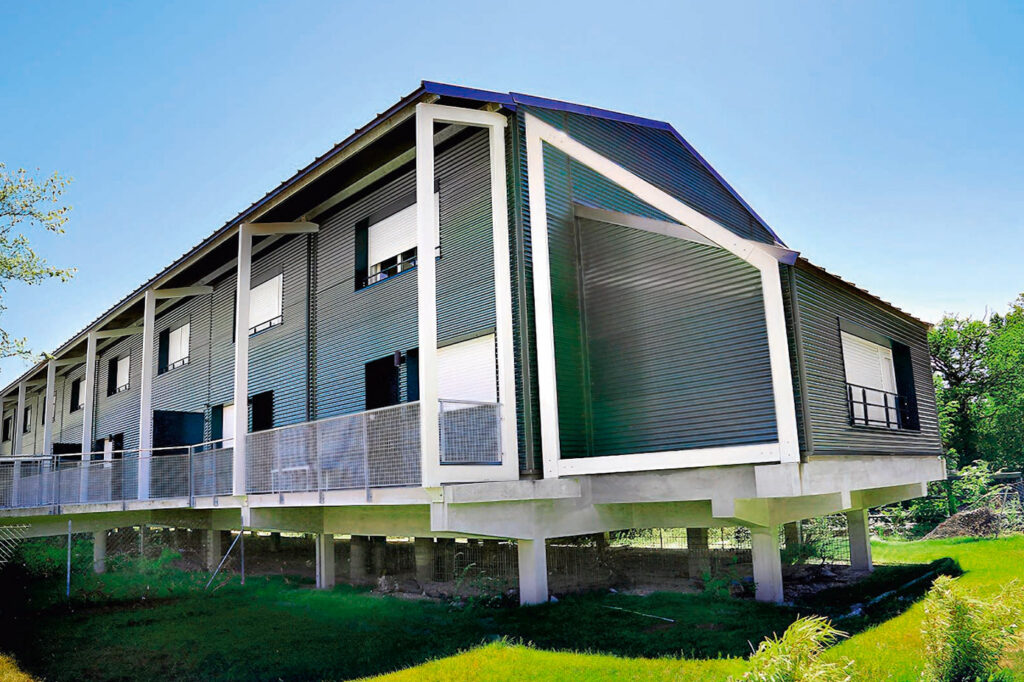
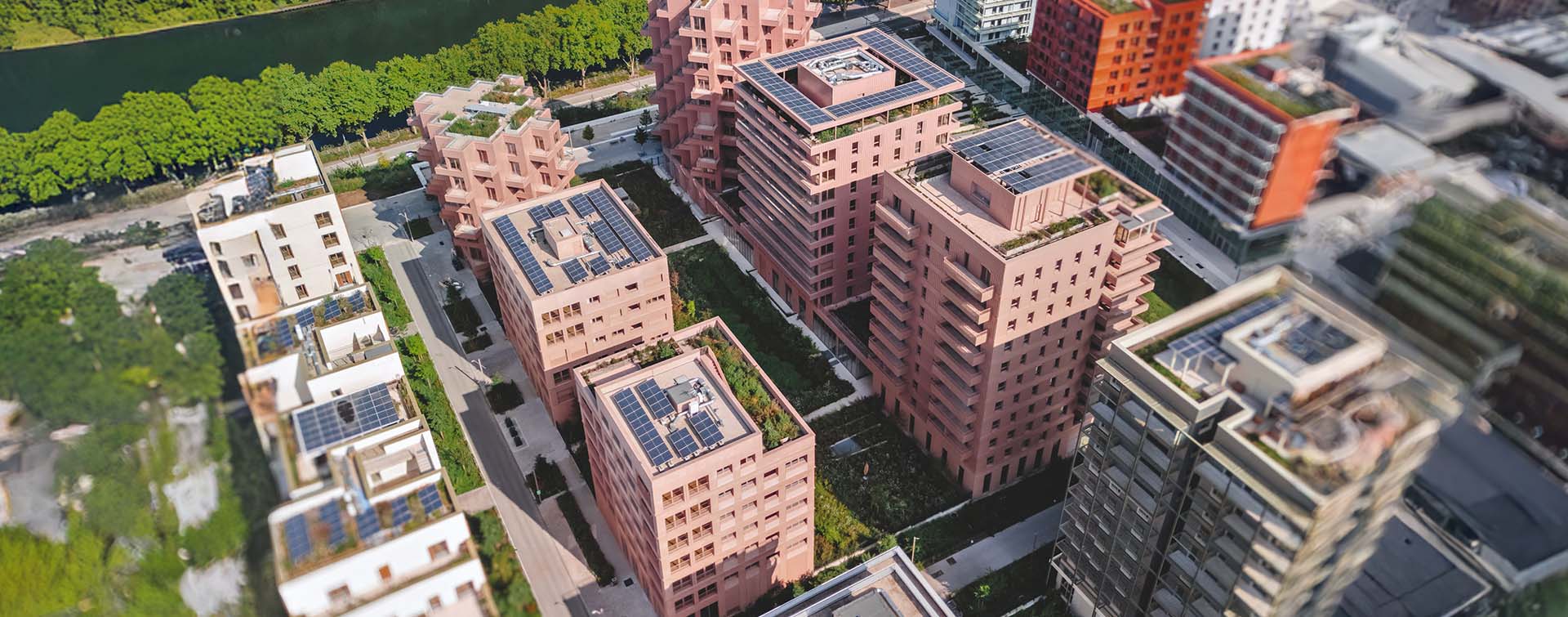
The redevelopment of the former Matra industrial site in France was designed to absorb flooding from the river that runs through the area, where water levels have risen by as much as 1.45 metres. Residential buildings were therefore constructed on stilts, while roads, sidewalks and access routes were elevated.
To channel floodwaters and ensure they drain away quickly and completely as the water recedes, the district now features a network of parallel streets, a large floodable park and a retention basin.